setting#
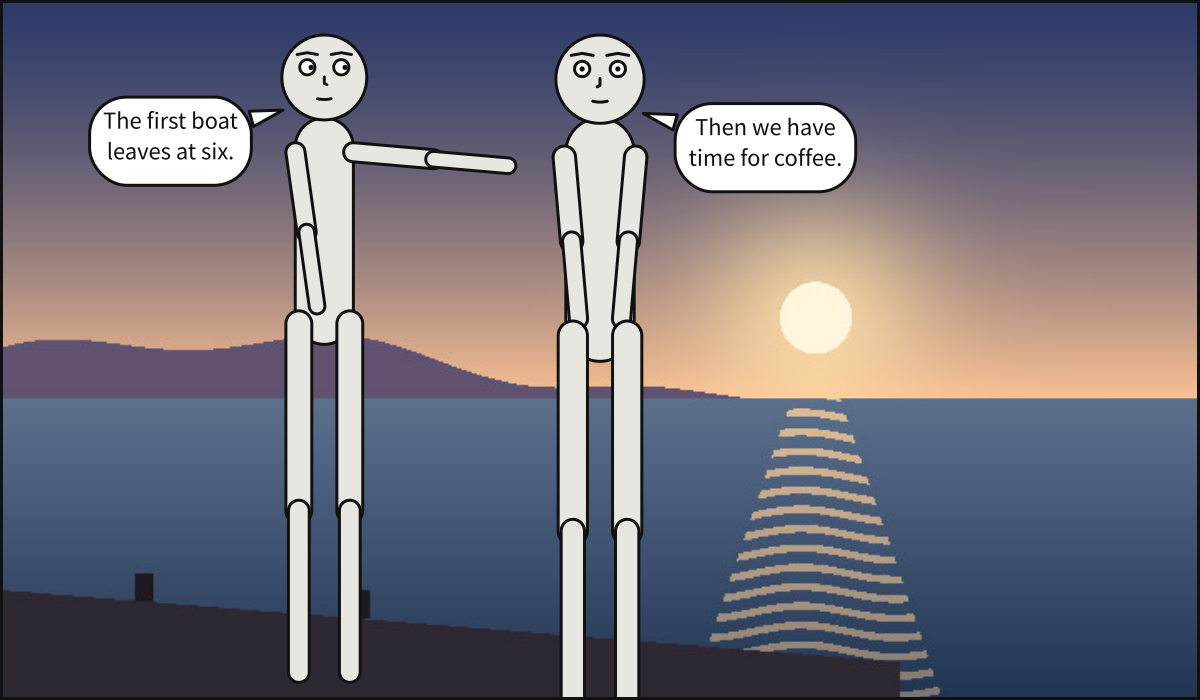
Where and when the panel happens: a named place, tonal masses or a picture behind the cast, with the time of day and the weather.
Where |
A |
Type |
a mapping |
Default |
each key’s own |
Since |
0.6 |
Diagnostics |
Where and when the panel happens, drawn as tonal masses rather than as geometry, or as a
picture drawn elsewhere. A panel with no setting renders exactly as it always did: figures on
white.

What is behind the cast is said once, in one of three ways, and never two of them: a named
place, a list of masses, or an image.
scenet check reports two of them together as conflicting-setting, at the key other than
image. A panel that inherits one of them, from a scene’s defaults or from the panel it is
over, leaves it out with null: place: null beside its own image. The
horizon composes masses, so it goes with a place or masses, and never with a
picture, which has its own. time and weather go with any of
them.
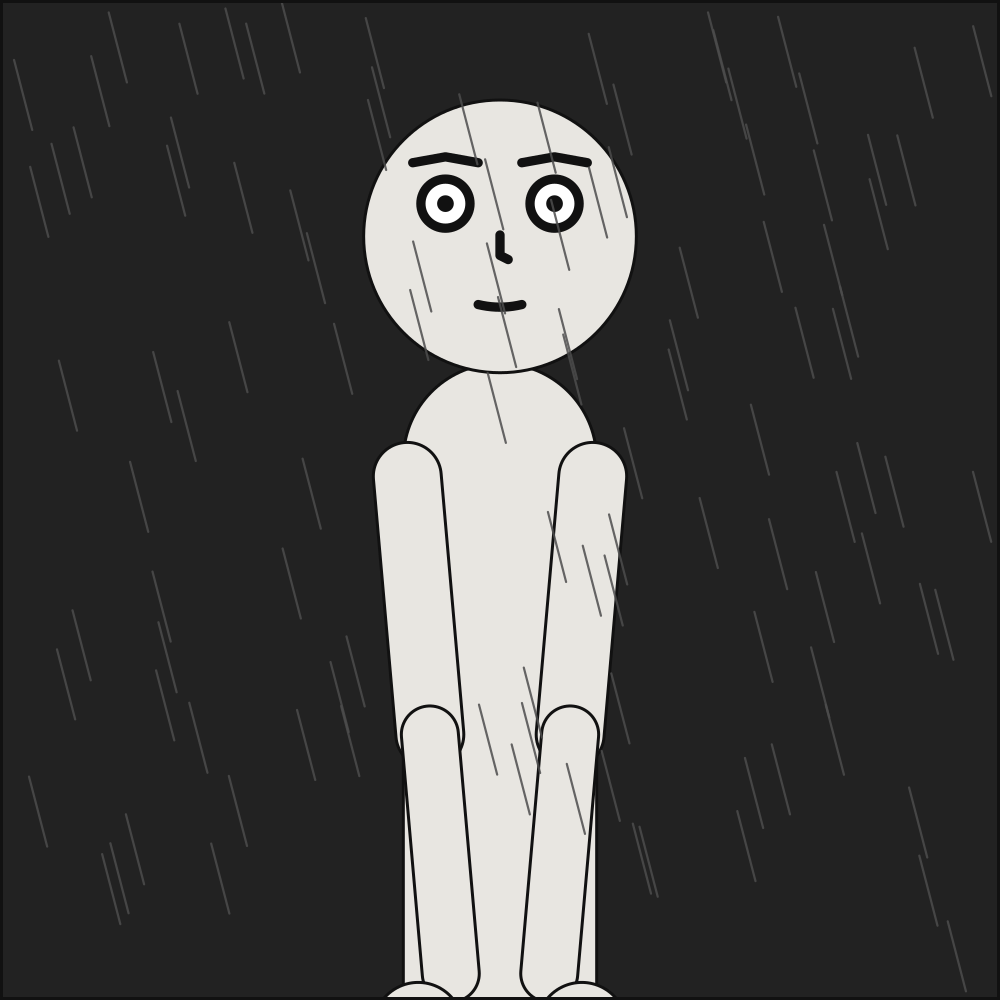
setting: {place: docks, horizon: mid, time: night, weather: rain}
cast: {alice: {reference: alice}}
See also: Letter over your own art,
palette.
setting.place#
A named place, which stands for the list of masses it expands into. Write this, masses or image, never two of them.
Where |
A |
Type |
a name |
Values |
|
Default |
none |
Since |
0.6 |
Diagnostics |
|
In the gallery |
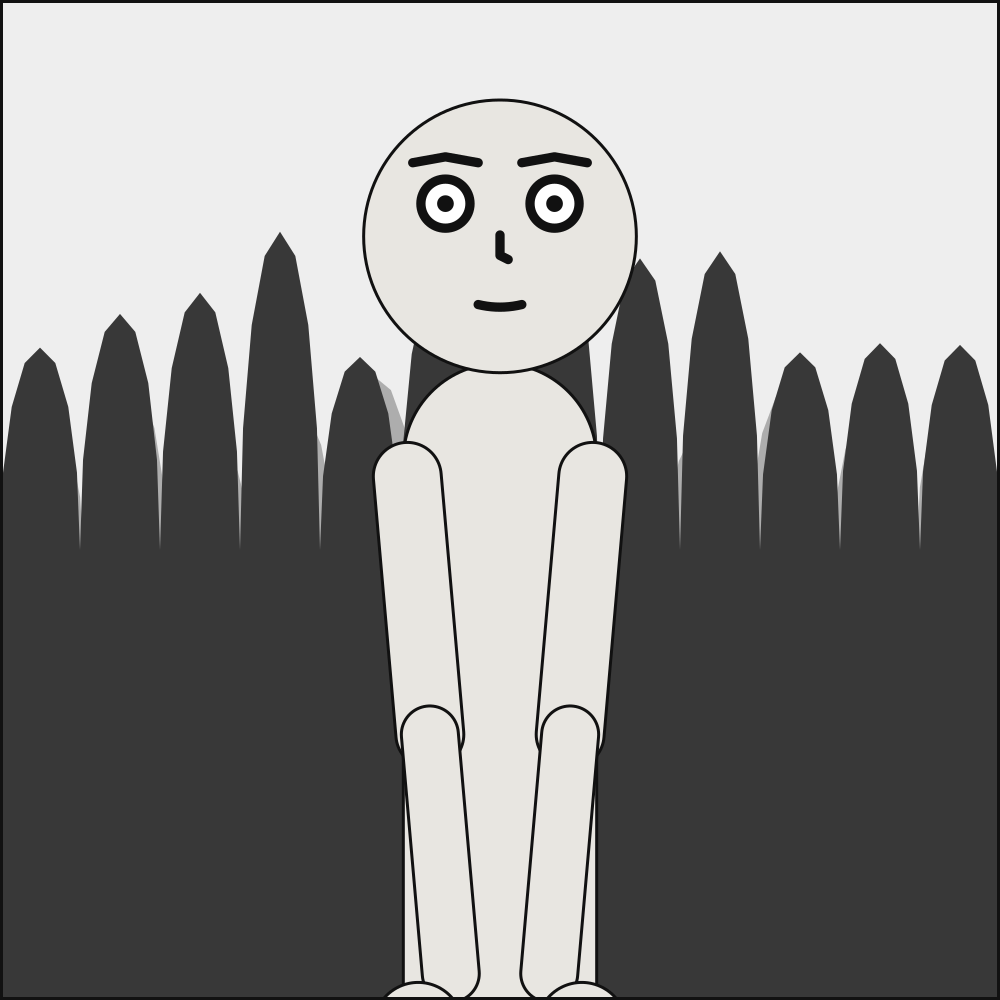
The headline surface, because the thing an author wants to write is where the scene is, not a list of shapes. Each place expands into masses, which are what a plane and a mass mean:
Place |
Expands into |
|---|---|
|
sky·far, building·near·left, building·near·right, ground·near, building·foreground·left |
|
sky·far, solid·far·right, ground·mid, ground·near |
|
sky·far, building·far·left, water·mid, structural·mid·right, ground·near |
|
sky·far, plant·far, ground·mid, ground·near |
|
sky·far, plant·far, plant·near·left, plant·near·right, ground·near |
|
sky·far, solid·far, solid·mid·left, plant·mid·right, ground·near |
|
wall·far, window·far·center, ceiling·mid, floor·near, furniture·near |
|
wall·far, window·far·right, ceiling·mid, floor·near, furniture·near·left |
|
sky·far, water·mid, ground·near |
|
sky·far, building·far, building·mid·left, building·mid·right, ground·near |
The rule that keeps place: honest: a preset expands into a mass list the author could have
written themselves, and is never a second opaque format. The expansion happens in the frontend,
exactly as alice left_of bob is expanded into a relation – so by the time anything downstream
sees a backdrop, there is one representation of it.
Free prose is deliberately not offered. setting: "a rainy street corner at midnight" needs
language understanding, and guessing produces panels that are confidently wrong. A named place is
the honest middle: it reads like a description and resolves deterministically. scenet check
reports an unmatched name as unknown-place, listing the ones that exist.
See also: setting.masses, what a place is made of.
setting.masses#
The backdrop as tonal masses, back to front: what a place expands into, written out. Write this, place or image, never two of them.
Where |
A |
Type |
a list of mappings |
Default |
none |
Since |
0.6 |
Diagnostics |
|
In the gallery |
A place is a convenience. Underneath it is a list of masses, which stays authorable whenever you want control – and which is exactly what a place expands into. Each mass is a kind of stuff, on a plane, across a span of the panel; they are drawn back to front.
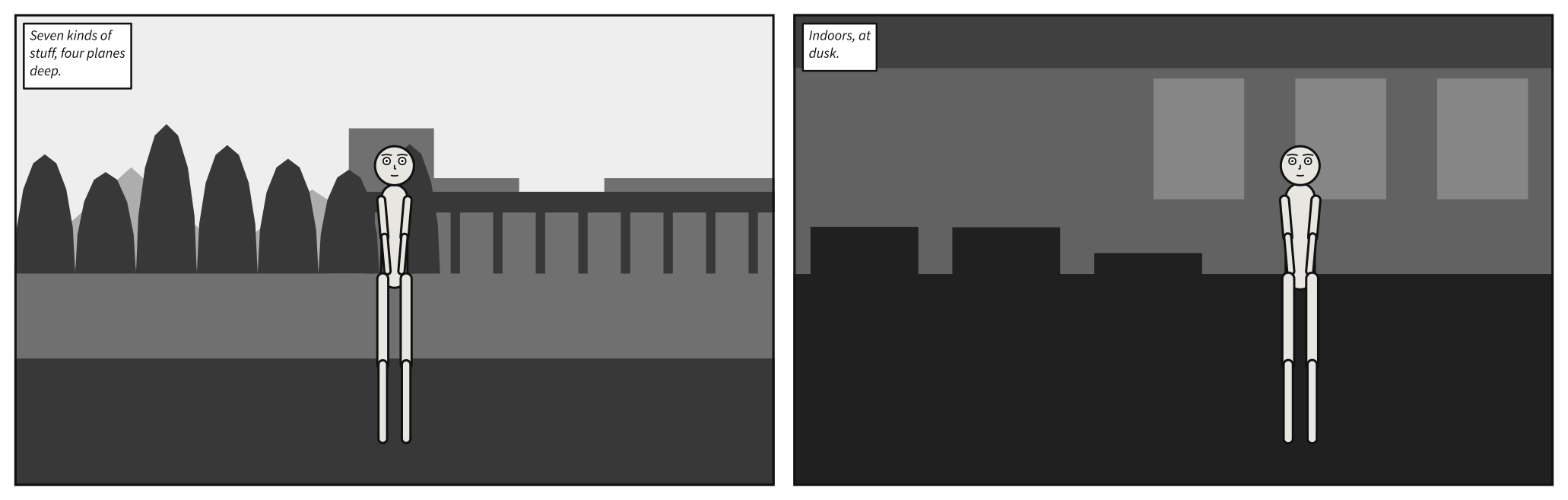
One authored mass may resolve to several polygons: furniture is a few separate blocks, a wall holds several windows. Backdrop silhouettes are generated, and seeded from the setting and the panel’s size, so the same masses always draw the same shapes.
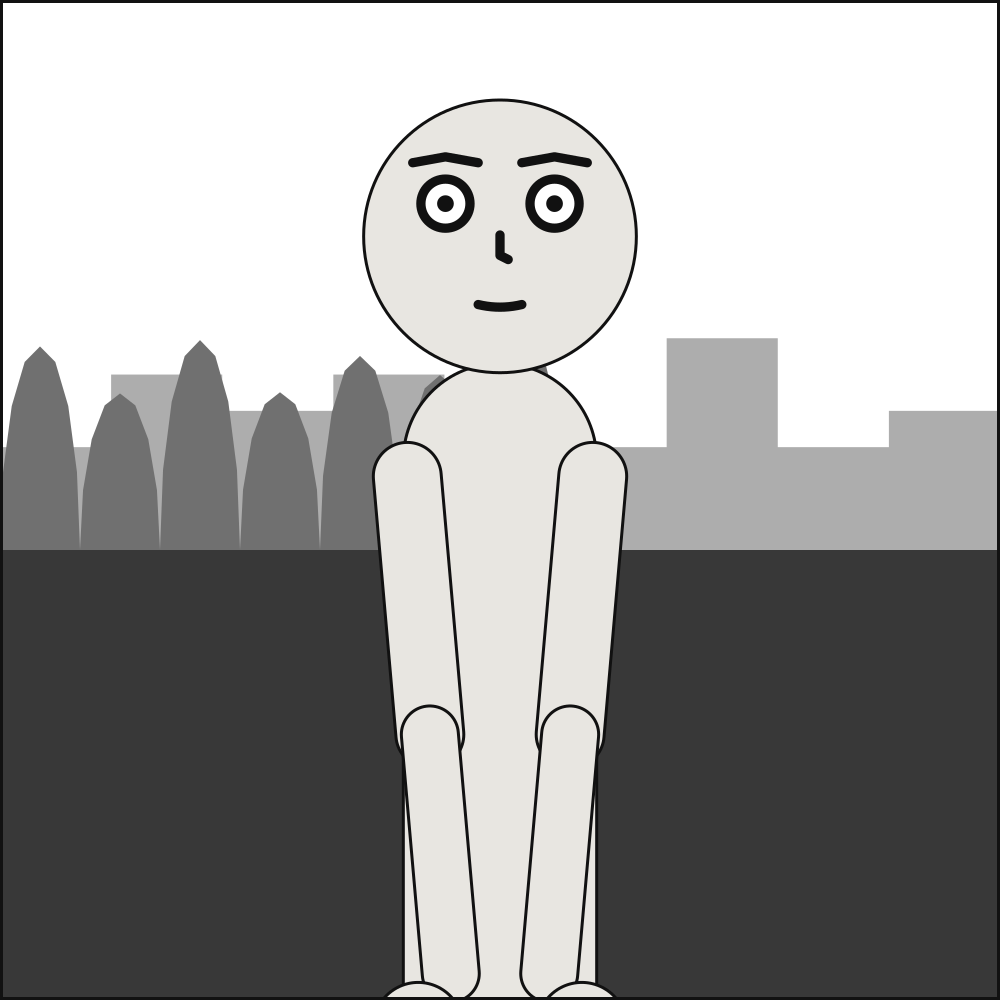
setting:
  horizon: mid
  masses:
    - {kind: building, plane: far, spans: full}
    - {kind: plant, plane: mid, spans: left}
    - {kind: ground, plane: near, spans: full}
cast: {alice: {reference: alice}}
See also: setting.place.
setting.masses[].kind#
What the mass is made of, which decides its silhouette: seven outdoor kinds of stuff and five indoor.
Where |
A |
Type |
a name |
Values |
|
Default |
none: required |
Since |
0.6 |
Diagnostics |
kind is subsetted from the supercategories of
COCO-Stuff, the canonical taxonomy of stuff – “amorphous
background regions” as opposed to things with a well-defined shape. Twelve of them, seven outdoor
and five indoor:
Kinds |
|
|---|---|
Outdoor |
|
Indoor |
|
Deliberately not COCO-Stuff’s leaf names. Its actual classes are building-other, sky-other,
wall-brick, water-other; the -other suffix marks the catch-all inside a supercategory, and
building-other is not a word anyone should have to type. Its textile, food and rawmaterial
supercategories are left out: drapery and objects, not scene-defining masses.
A kind decides the shape a mass takes, never its value, which is the plane’s. Two kinds sit off
their own plane’s rung, and both stay on the ladder rather than beside it: sky is at infinite
distance, so it always takes the atmosphere’s value, and window is a hole showing a more distant
plane, so it takes the rung one step farther back.
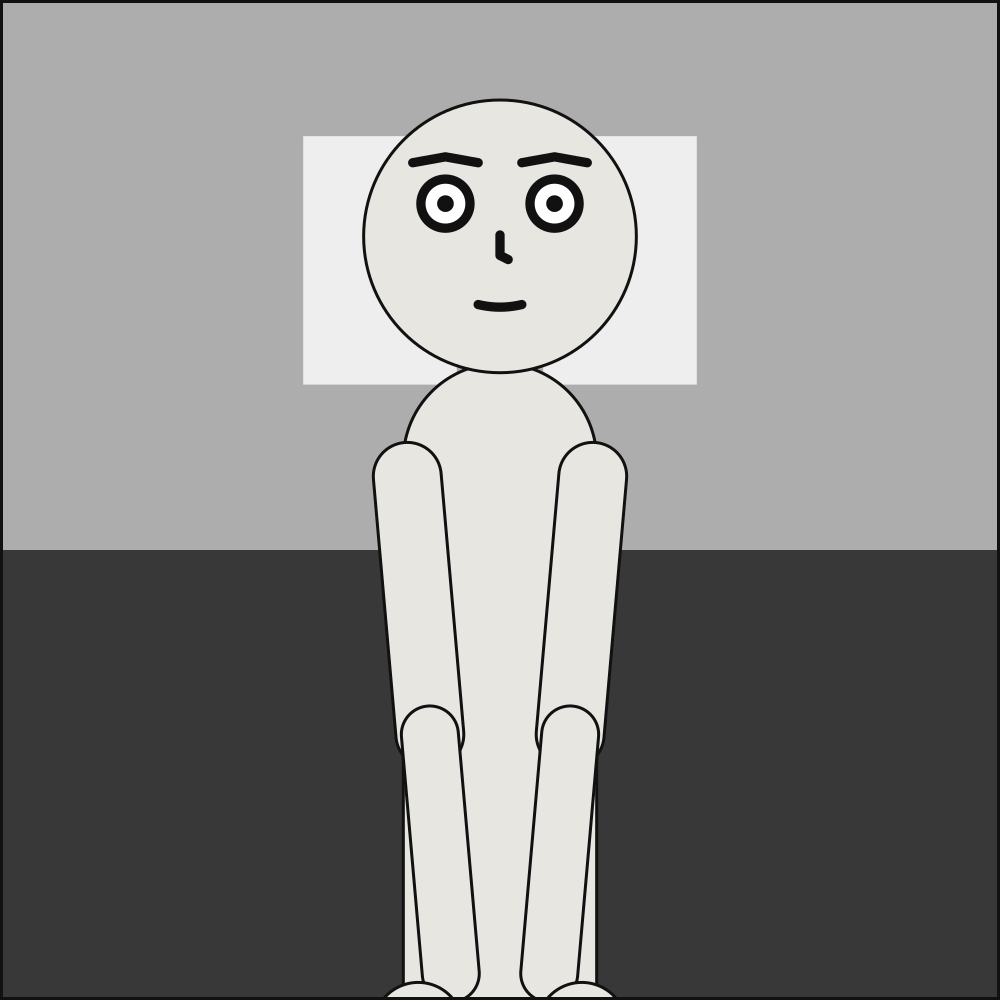
setting:
  masses:
    - {kind: wall, plane: far}
    - {kind: window, plane: far, spans: center}
    - {kind: floor, plane: near}
cast: {alice: {reference: alice}}
See also: setting.masses[].plane.
setting.masses[].plane#
How far back the mass sits, which decides its value and its draw order. A foreground mass is drawn over the cast.
Where |
A |
Type |
a name |
Values |
|
Default |
|
Since |
0.6 |
Diagnostics |
|
In the gallery |
plane decides two things at once, and neither is a new mechanism. It maps onto the same
integer painter’s order in_front_of uses – the three backdrop planes take negative depths, and
foreground takes one above the frontmost actor, so a foreground mass draws over the cast the way
a silhouetted doorway does. And it decides value: reading front to back, a mass never gets
darker.
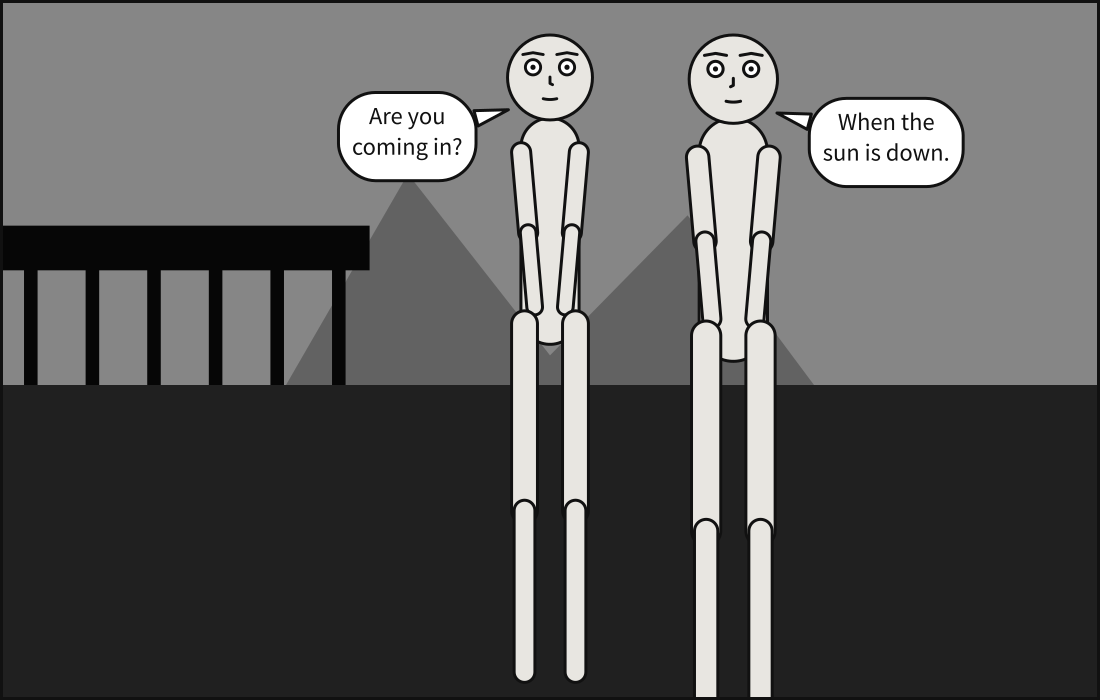
Value comes from the plane and from nothing else – not from the kind. That is what keeps the notan reading literal: masses at one distance read as one mass, and their arrangement is what carries the place. A nearer plane is also drawn larger, which is size perspective alongside aerial perspective: a near hill is not merely darker than a far one, it is bigger.
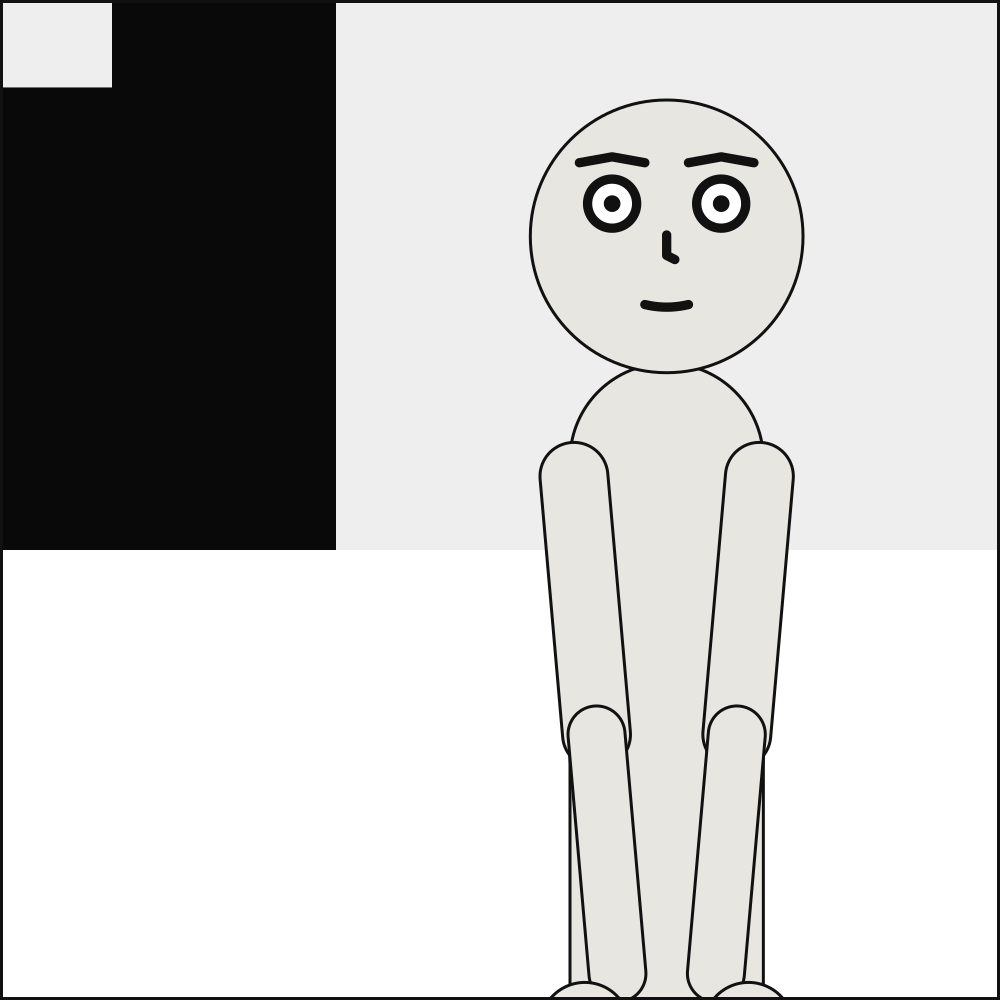
setting:
  masses:
    - {kind: sky, plane: far}
    - {kind: building, plane: foreground, spans: left}
cast: {alice: {reference: alice, at: right_third}}
See also: setting.time, which sets the ladder the planes are spaced on.
setting.masses[].spans#
How much of the panel’s width the mass covers: all of it, or its left, center or right part.
Where |
A |
Type |
a name |
Values |
|
Default |
|
Since |
0.6 |
Diagnostics |
spans is an absolute extent, and that is not cosmetic. Any construct that would reintroduce
a left/right disjunction has to resolve it before the solver – see
why ordering must be explicit. A span is an extent
rather than a relation, which is what stops masses becoming an unordered beside. left and
right overlap slightly in the middle so that using both leaves no seam down the centre of the
panel.
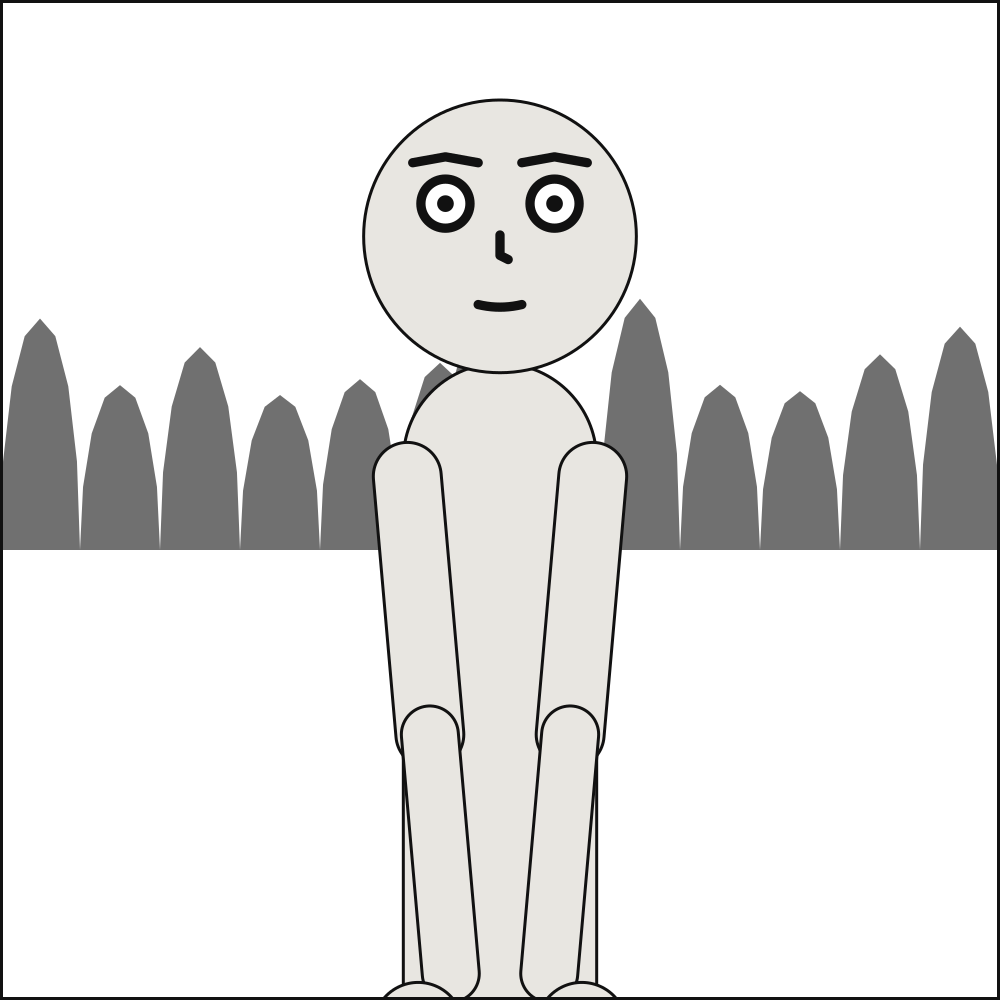
setting:
  masses:
    - {kind: plant, plane: mid, spans: left}
    - {kind: plant, plane: mid, spans: right}
cast: {alice: {reference: alice}}
See also: setting.masses[].kind.
setting.horizon#
Where the ground meets what is behind it, which every mass is composed against: high shows more ground, low less.
Where |
A |
Type |
a name |
Values |
|
Default |
|
Since |
0.6 |
Diagnostics |
|
In the gallery |
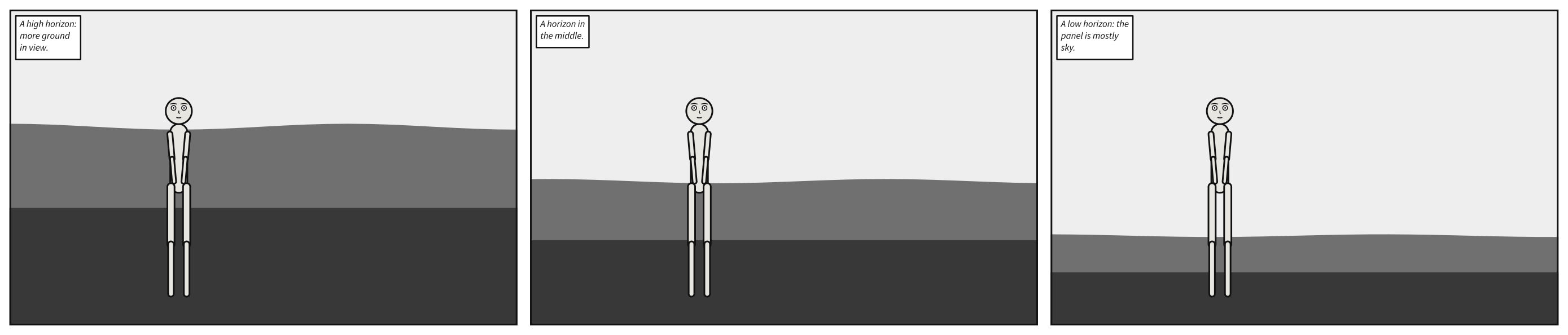
One line for the whole panel, which every mass is composed against: masses of the ground sort
start at it and run down, masses that stand in the world rise from it. A high horizon sits
nearer the top of the frame, so more ground is in view. Named rather than given as a number for the
reason at: is: the author says how the panel is composed, not where a line goes.
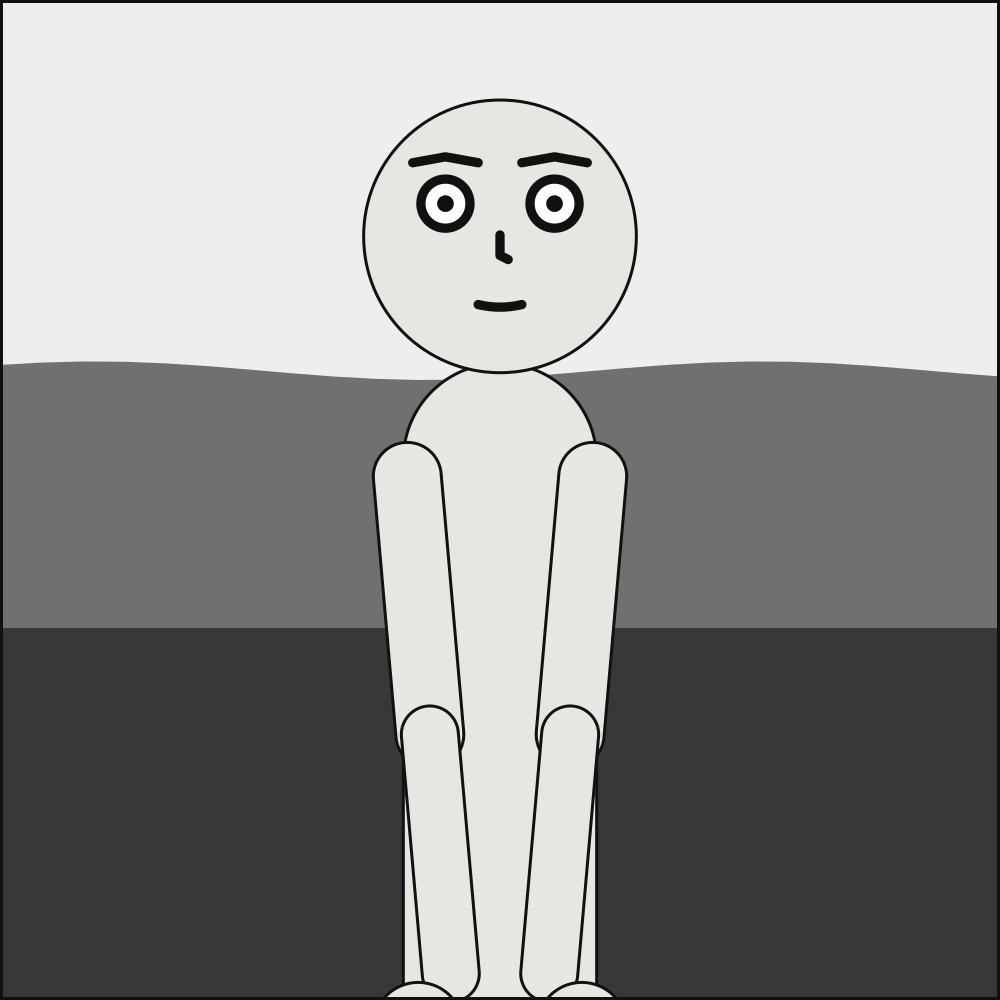
Ground, floor and water all run to the bottom edge, so a near quayside drawn from the horizon would
bury the water behind it. Each starts lower than the plane behind it, and that stack of receding
bands is the depth cue. The exception is the farthest one in a panel, which meets the horizon
itself: there is nothing behind it to reveal. A picture has a horizon of its own, so a horizon
beside an image is conflicting-setting.
See also: setting.masses.
setting.time#
When the panel happens, which sets the two ends of the value ladder: the foreground’s value and the atmosphere’s.
Where |
A |
Type |
a name |
Values |
|
Default |
|
Since |
0.6 |
Diagnostics |
|
In the gallery |
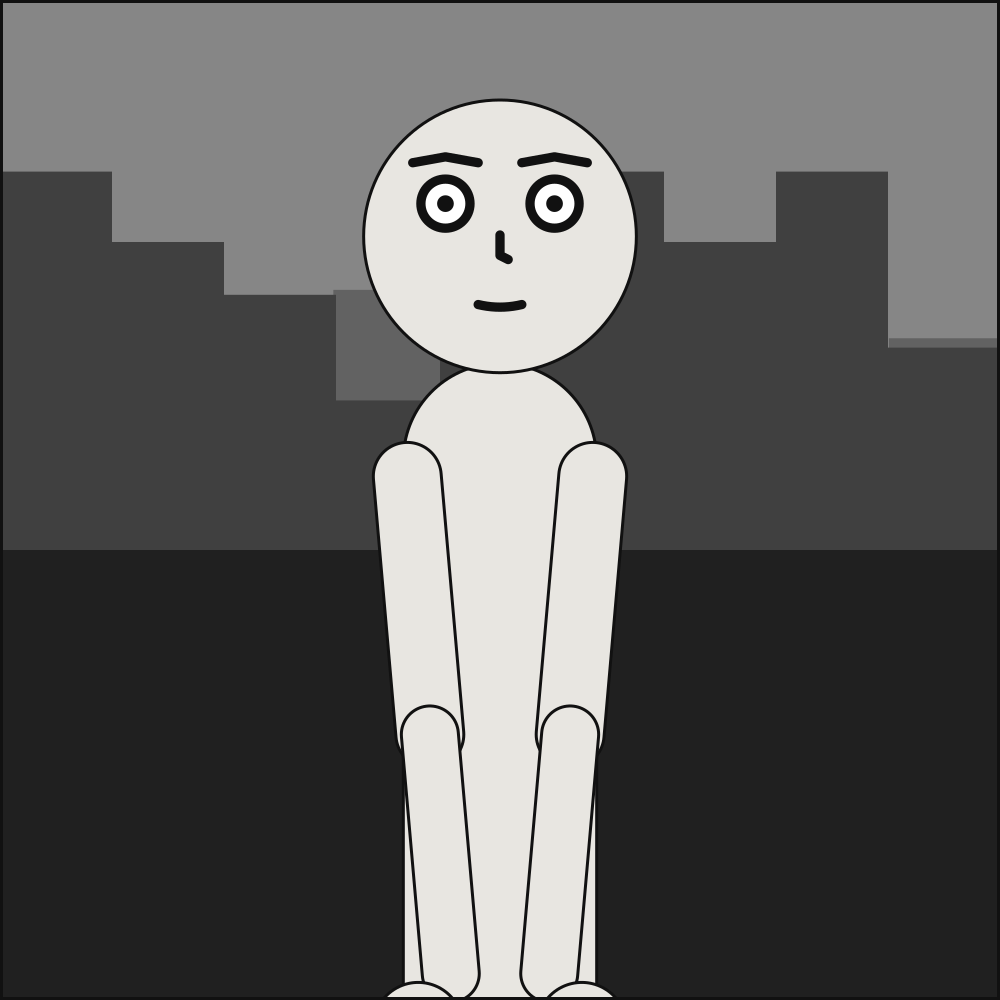
time sets a panel’s values. It supplies the two ends of the value ladder – the value of the
foreground and the value of the atmosphere – and the planes are spaced evenly between them in
OKLab lightness, which predicts perceived lightness
well. So night is a darker, narrower ladder, which is what night does to a drawn scene, and the
ladder stays monotonic in depth at every hour by construction rather than by tuning. In mono it
adds no colour; under palette: tinted each value takes the hour’s colour
without changing.

Over a picture, time chooses the tint of the veil and of falling weather, and whether rain is
inked or papered; the value ladder has nothing to apply to, since a picture’s values are the
artist’s.
See also: setting.weather, caption.tone.
setting.weather#
What the air is doing: fog veils the backdrop; rain and snow veil it as cloud, and fall over everything, the cast included.
Where |
A |
Type |
a name |
Values |
|
Default |
|
Since |
0.6 |
Diagnostics |
weather adds a layer over the backdrop. clouds and fog are first-class stuff in COCO-Stuff,
so this vocabulary did not have to be invented either:
|
What it does |
|---|---|
|
Nothing. The panel has no atmosphere layer at all |
|
A dense, low-frequency noise veil, tinted with the atmosphere itself |
|
The same veil as cloud – nearer, so darker than the sky – plus slanted streaks |
|
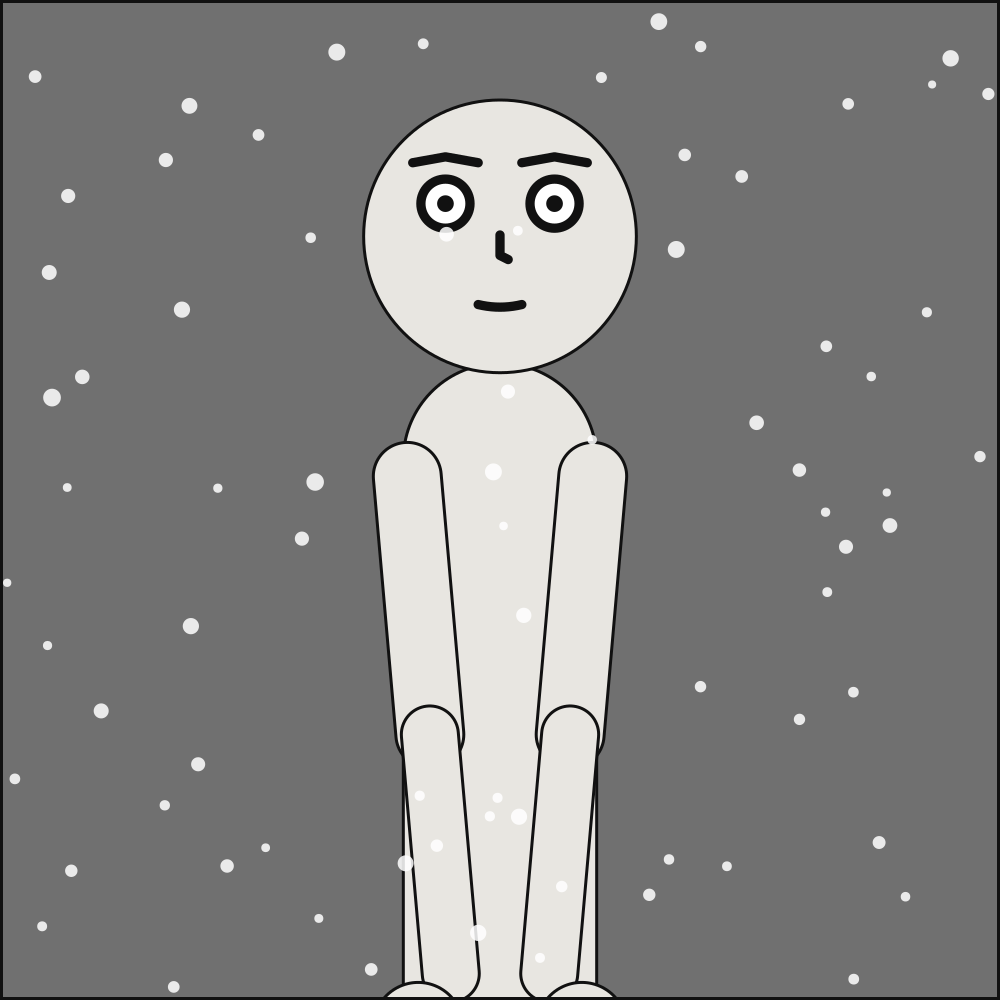
The same veil, plus flecks |
The veil sits over the backdrop and under the cast: fog between the reader and the figures would be the more literal reading and would bury them. Falling weather goes over everything, because it is between the reader and the panel – which is why it crosses the figures.
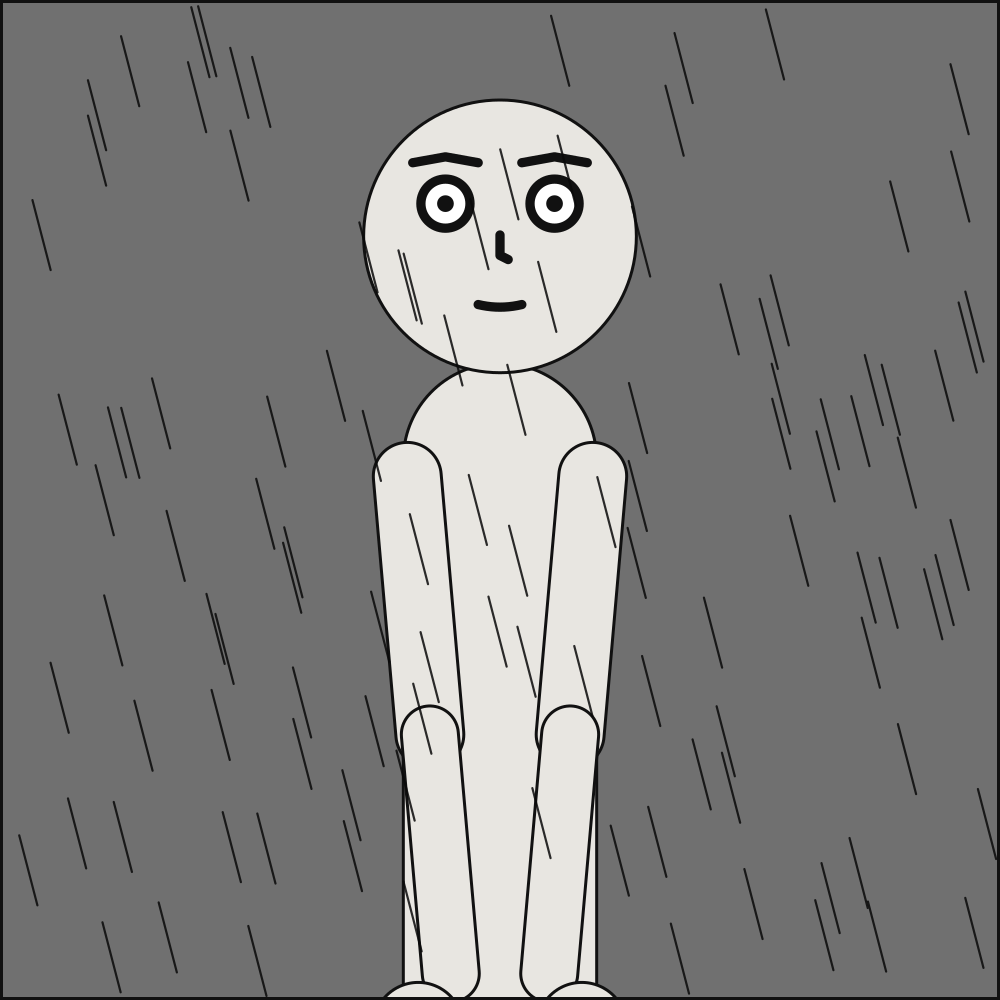
Rain flips to ink over a bright sky and to paper over a dark one, as inkers do, because a white streak over noon is invisible and a black one over midnight is too. Snow never flips: snow is white, and the overcast veil is what gives it something to read against. Over a picture, the veil and falling weather are drawn exactly as over masses.
setting: {place: shore, time: day, weather: snow}
cast: {alice: {reference: alice}}
See also: setting.time, Determinism, on how the
noise is drawn.
setting.image#
A picture drawn elsewhere, behind the cast: a PNG or JPEG file, relative to the document. Only its size is read. Written instead of place and masses.
Where |
A |
Type |
text |
Default |
none |
Since |
0.12 |
Diagnostics |
|
In the gallery |
image names a picture drawn elsewhere – painted, pencilled, photographed or rendered – and the
cast is drawn in front of it, lettered by the same rules as on any other backdrop.
The path is read as a font’s is: relative to the folder the document is in, wherever
scenetwas run from, with/between folders. An absolute path is refused. Text compiled with no file behind it has no folder, so it names a picture only when its caller says which folder it belongs to, or hands the file over with it.PNG or JPEG, the two raster formats SVG 2 requires every viewer to draw, told apart by their first bytes rather than by the file’s name.
Only the size is read. The compiler takes from the file how many pixels it has across and down, from its header, and decodes nothing: the solver never sees artwork, here as everywhere. Only the print PDF carries the pixels, unchanged, into the file it writes.
A picture its EXIF says to turn is refused. Renderers disagree on obeying that tag – Chromium turns an SVG
<image>by it, others do not – so such a picture would be upright in one viewer and on its side in the next. Save it with the pixels turned instead.
scenet check reports every way a picture cannot be read as image-file, at the line it is named
on, without running the solver. In the playground,
Image… adds a picture to the document’s art/ folder for as long as the tab is open.
Nothing else moves. The picture costs a balloon nothing. The compiler does not know what is in
it, so a balloon may sit anywhere on it; the cast’s faces are what lettering keeps clear of. The
camera frames the cast exactly as it would in front of masses. When the people are in the picture,
its artwork contract says where – see cast.<id>.figure.
Linked or embedded. The SVG names the picture by the path exactly as written, percent-encoded,
so it is found when the SVG sits beside the document – which is where scenet build writes it.
scenet build --embed-images writes the picture’s bytes in as a data: URI instead, which an SVG
shown as an <img>, turned into a PNG or written anywhere else needs; the playground always
embeds. Either is byte-identical for the same picture. The link is xlink:href rather than SVG 2’s
plain href, because Inkscape still does not load a resource named by plain href; see
prior art.
Read aloud. The picture is part of the panel’s one image, role="img", so it adds nothing to
the accessible name and has no title of its own. A generated description names neither the place
nor the hour over a picture – the compiler has not seen it – only the weather it drew. Write
description to say what the picture shows.
setting: {image: art/harbour.jpg, weather: rain}
cast: {alice: {reference: alice}}
See also: setting.fit, Letter over your own art.
setting.fit#
How the picture fills the panel: cover fills it and crops what overhangs, equally on both sides; contain shows the whole picture. Left out, cover.
Where |
A |
Type |
a name |
Values |
|
Default |
none |
Since |
0.12 |
Diagnostics |
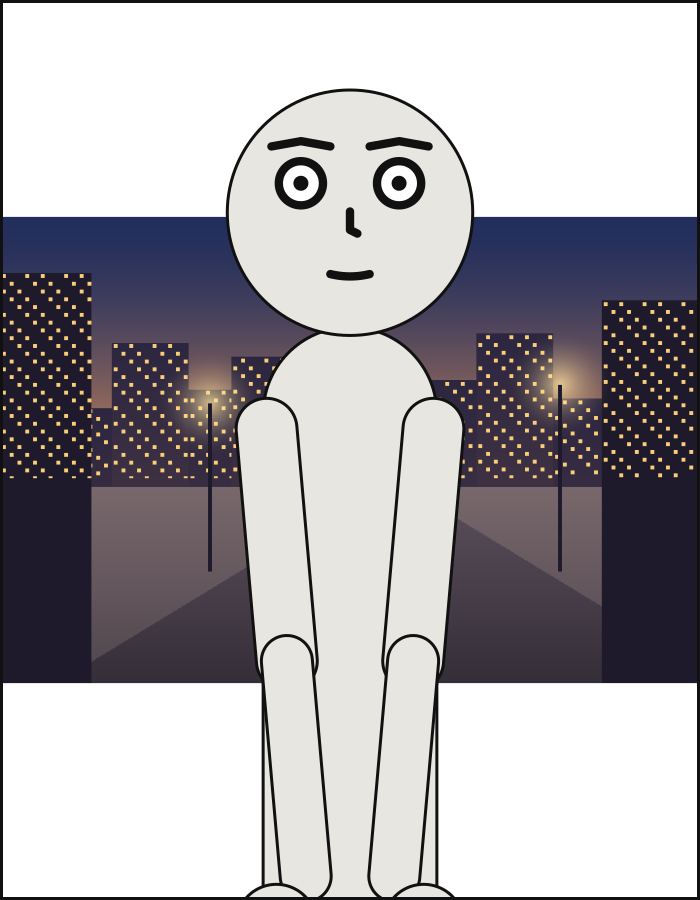
The picture is centred either way and never stretched: its shape is a fact about it, and a figure
drawn into it would be stretched with it. cover fills the panel and crops what overhangs, equally
on both sides; contain shows the whole picture, the panel showing round it where their shapes
differ – SVG’s slice and meet. A fit with no image is invalid-field; in a scene, the
image may be inherited and the fit given alone.
A cover crop can push a figure’s face or mouth out of the panel. Lettering stays inside the panel
as always; a tail to a mouth cropped away ends on the frame, aimed at it, and scenet build says
so in a note.
panel: {size: [700, 900]}
setting: {image: art/street.png, fit: contain}
cast: {alice: {reference: alice}}
See also: setting.image.