Scenet#
Write what is in a comic panel. Scenet works out where everything goes, and draws it.
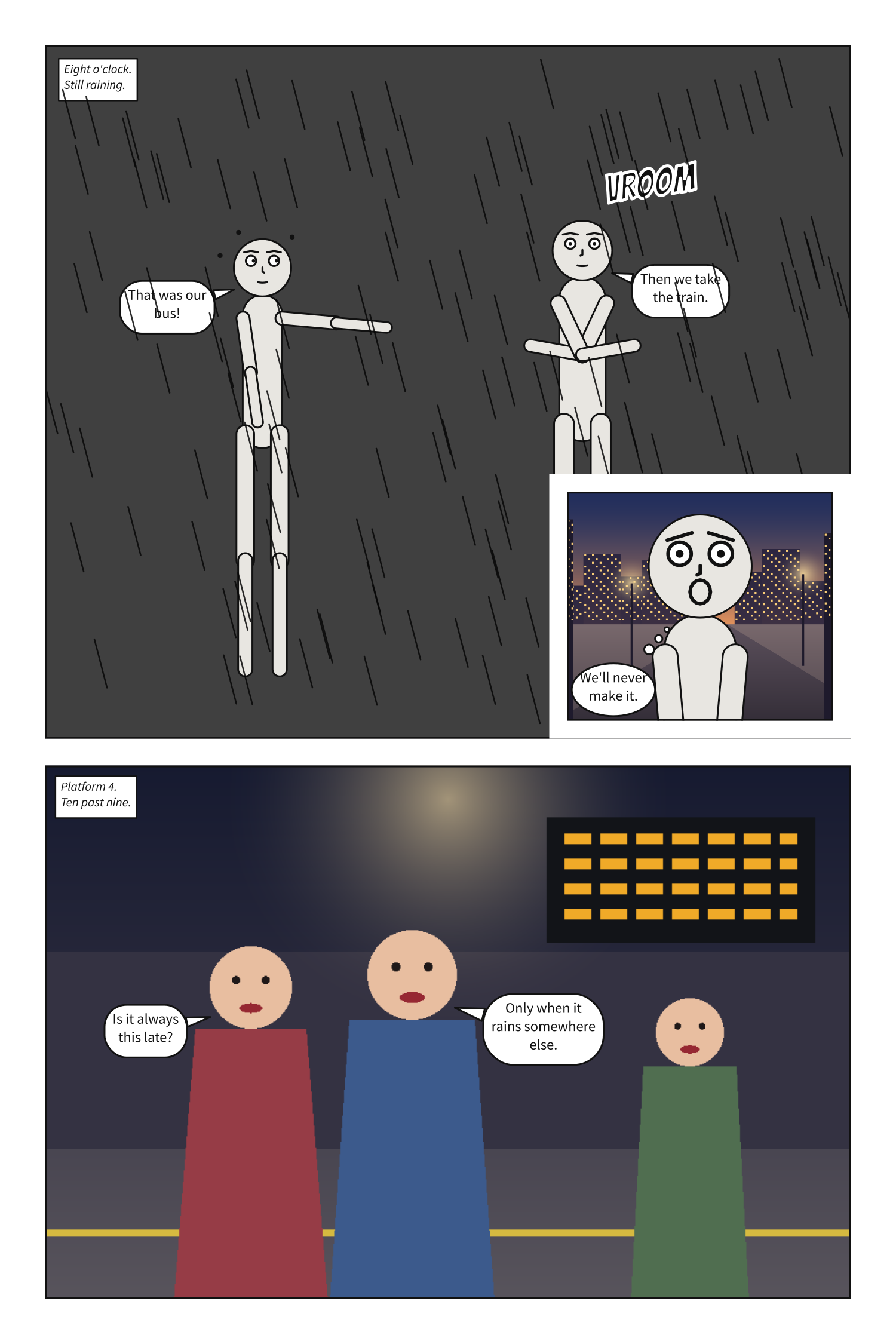
The gallery’s tour, exactly as scenet build draws it from one YAML file.
Scenet compiles a written description of a comic, whether a panel, a sequence, a page or a whole comic script, into SVG and into a PDF for print: it frames each shot, stages the cast, sizes, places and tails every balloon in reading order, letters over your own art, reads right to left, writes pictures a screen reader can read, and exports each panel for image models, all without an image model of its own.
This project is deliberately AI-generated. This project is, by design, almost entirely generated by AI. It exists as a personal training ground for learning to work with AI coding tools. The architecture, code, tests and documentation are overwhelmingly AI-authored, under human direction and review. Treat it accordingly: an experiment first, a usable tool second.
See it work#
You write what is in the panel, and no coordinates:
panel:
  size: [1000, 800]

camera:
  shot: medium_shot

cast:
  alice: {reference: alice, pose: pointing,     at: left_third}
  bob:   {reference: bob,   pose: arms_crossed, at: right_third, facing: left}

staging:
  - alice left_of bob
  - alice looking_at bob
  - alice ground_shared_with bob

script:
  - say: {by: alice, text: "You forgot your umbrella!", prefer: top_left}
  - say: {by: bob,   text: "I know."}
And this is what it compiles to: not an illustration of the idea, but the file
scenet build writes for that document.
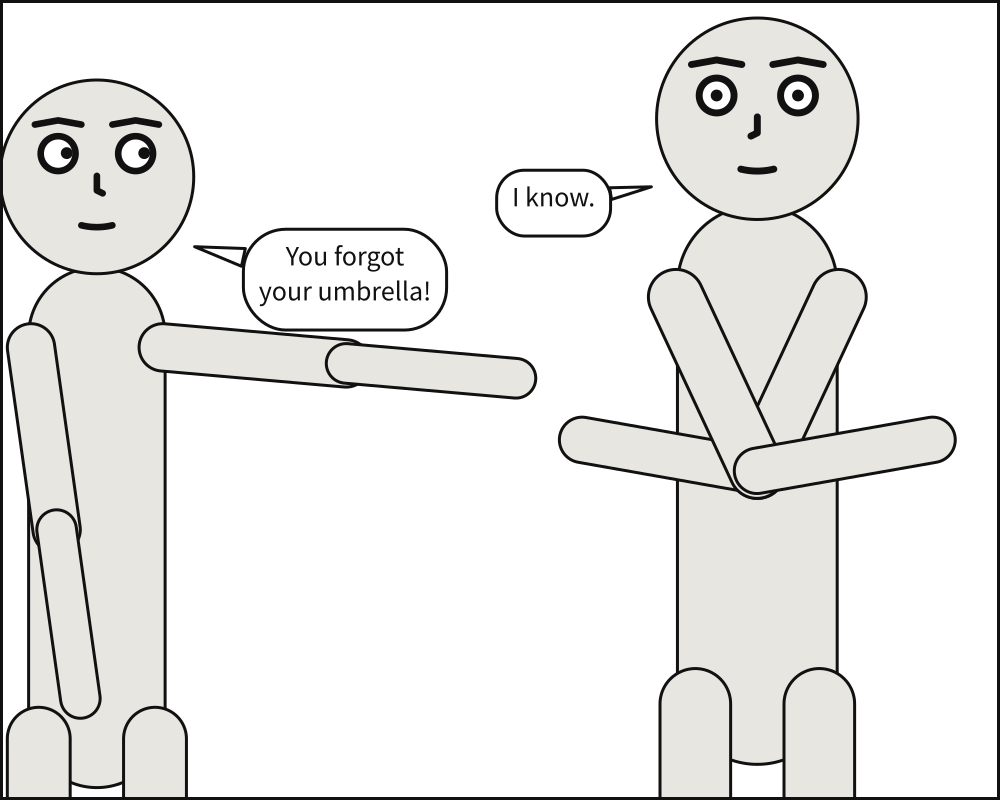
The compiler decides how large each figure is for a medium shot, where they stand and which way they face, how big each balloon must be for its words, where it can sit without covering a face, and how its tail reaches the speaker’s mouth.
Where to start#
Every example in the gallery, drawn beside its source; the playground, to change one; and what Scenet does today.
The author’s tour, twelve chapters from a first panel to a printed page; the guides for each job; and the language, key by key.
Learn Scenet from Python, five chapters from pip install to a
build in CI; then the Python API, name by name.
The spec pack, the Agent Skill and scenet mcp: the language
handed to a chat model, an agent or an MCP client, which reads its own errors and fixes them.
How the project is built and tested, and the contributor’s guide.
Why it exists#
Music has a score, which says what is played and leaves the sound to a performer. Scenet is a score for comics. Why Scenet says what that buys, and What’s new what each release changed.
Scenet is 0BSD, and its language is free to implement.