script#
What is said and heard, in the order it is read: say for a balloon, caption for a box, sfx for a sound effect.
Where |
A |
Type |
a list of mappings |
Default |
none |
Since |
0.1 |
Diagnostics |
|
In the gallery |
An ordered list of what is said and heard, each entry tagged by a verb: say puts a line
in a balloon, caption puts one in a box, and sfx letters a sound effect
into the picture. Order is meaningful: it is the order the reader reads them, and it
constrains where each box may be placed.
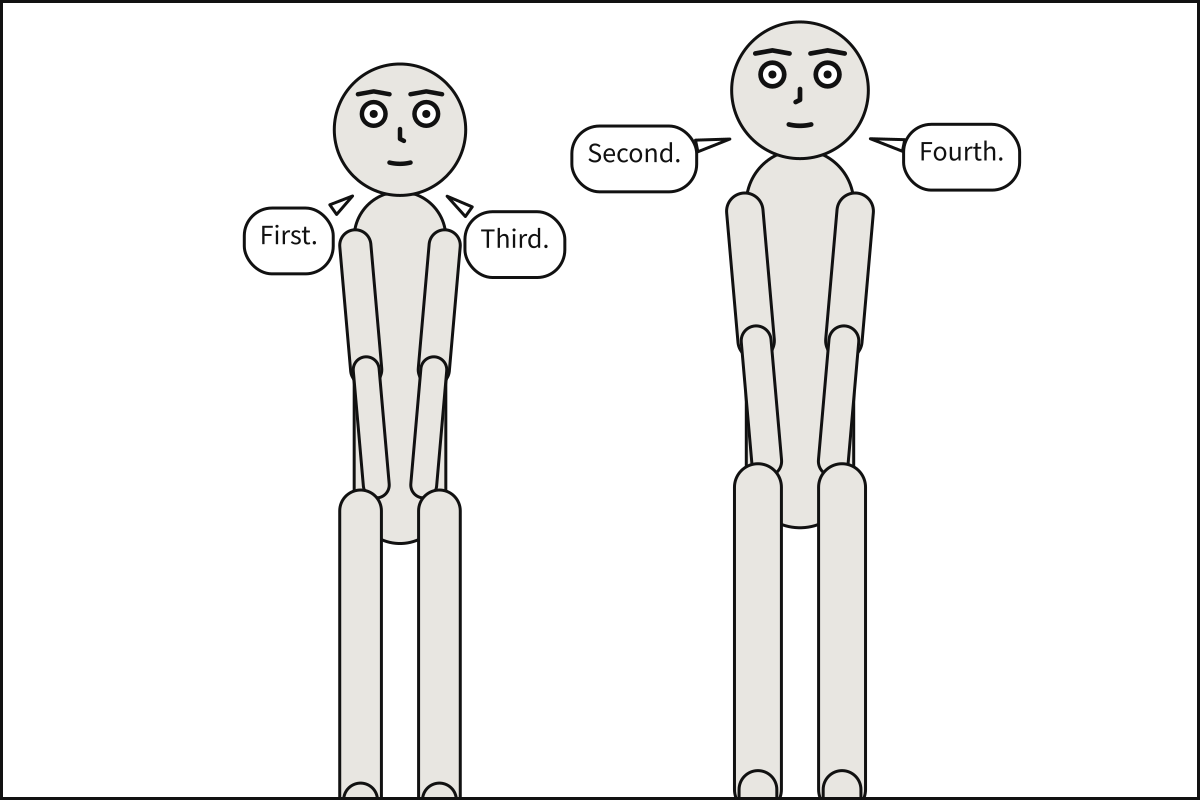
Reading order is enforced, not suggested. Balloons and captions are placed in script order, in
one pass, and a box may never sit above-and-left of the one before it – above-and-right in a
comic read right to left (see direction). Violating this is not a
cosmetic flaw: it makes the panel read in the wrong order, which is a correctness bug in a comic.
The constraint is therefore hard, and a panel whose boxes cannot be placed without breaking it is
refused as balloon-placement rather than rendered wrongly. That is the reading order.
Captions take their turn in that sequence rather than being placed first as a layer: a caption written between two lines of dialogue is read between them. A sound effect takes its number in the same sequence – the order a reader of the text, or a screen reader, follows – but is exempt from the geometric rule: a sound sits where the sound is, and holding it to above-and-left would make many panels impossible to letter. Read right to left, it stays exempt, and stays where it was: a sound is part of the picture, which is not mirrored.
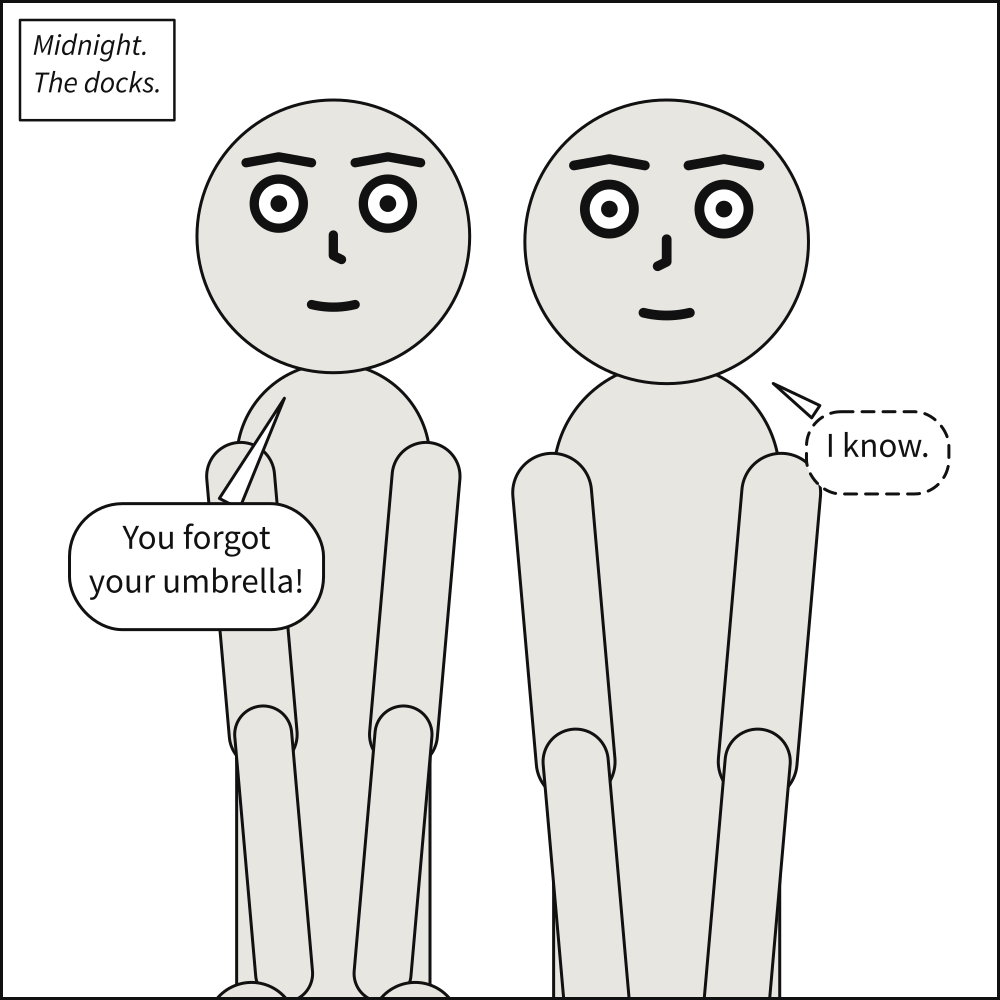
That sequence is what a screen reader hears. Every SVG names each panel with its
description and then every balloon, caption and sound effect in this
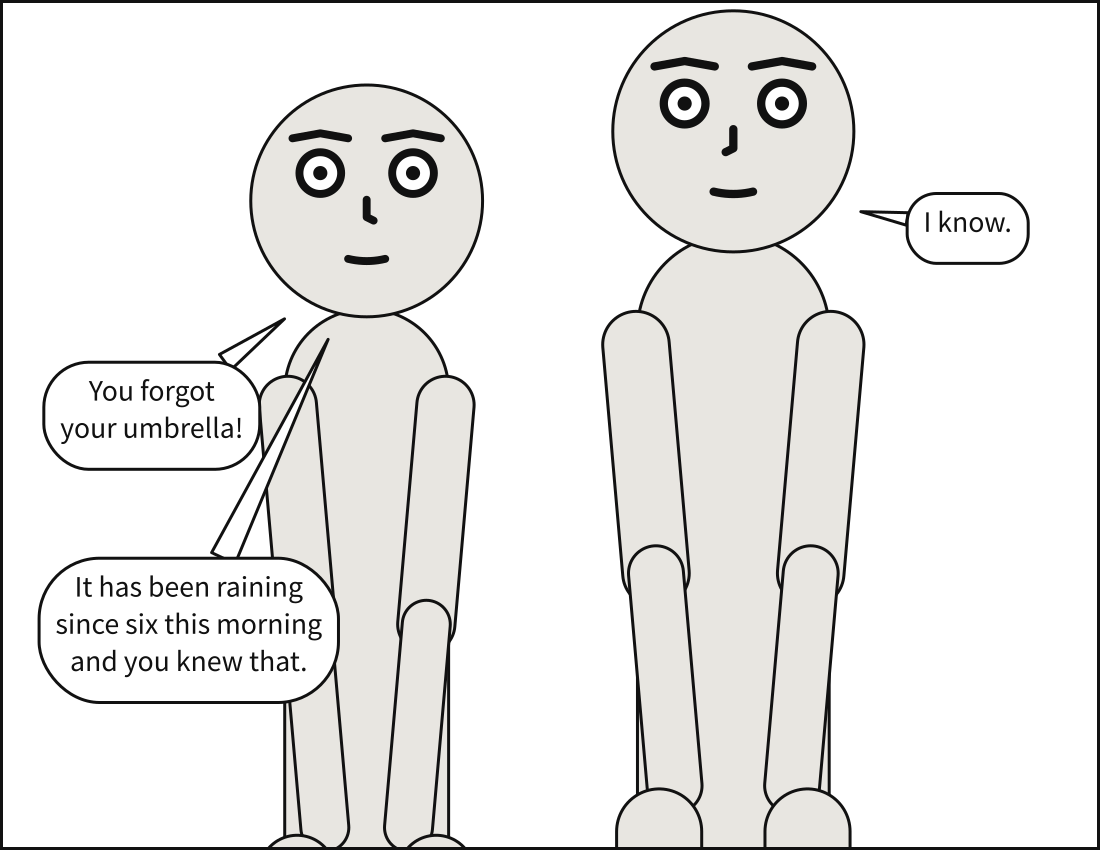
order – Caption: Midnight. Alice: You forgot your umbrella! Bob, whispering: I know. –
whatever order they are painted in; see accessible output.
A panel with more words than a letterer fits well gives a word-limit note.
cast:
  alice: {reference: alice, at: left_third}
  bob: {reference: bob, at: right_third, facing: left}
script:
  - caption: {text: "Midnight. The docks.", kind: locale}
  - say: {by: alice, text: "You forgot your umbrella!"}
  - say: {by: bob, text: "I know.", kind: whisper}
See also: When constraints conflict, Write a panel as a comic script.
say#
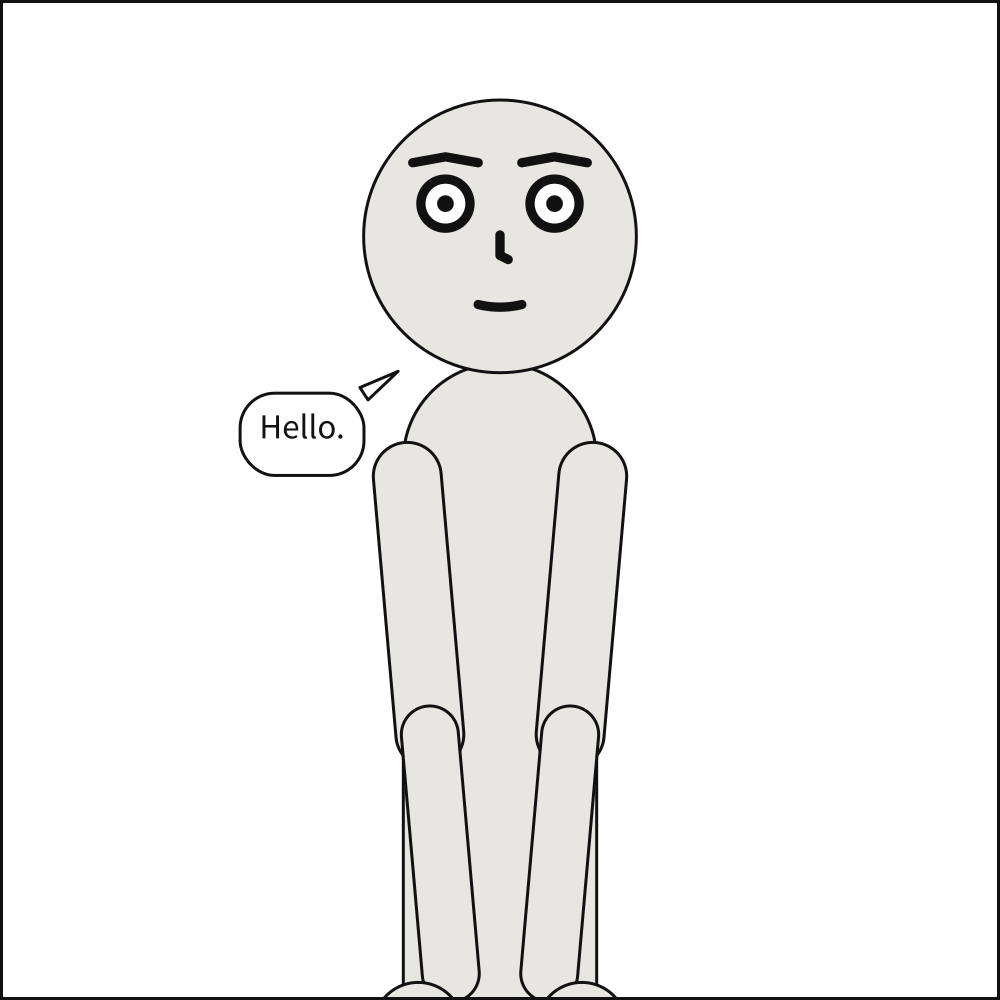
A line of dialogue, in a balloon whose tail points at the speaker.
Where |
A |
Type |
a mapping |
Default |
none |
Since |
0.1 |
Diagnostics |
A line of dialogue: a balloon, with a tail to the speaker’s mouth. Its keys say who speaks, what, how, and from where.
See also: caption, words nobody in the panel says.
say.by#
Who speaks: an actor id in the cast, whose mouth the tail points at. With off_panel, the name of somebody nobody draws.
Where |
A |
Type |
text |
Default |
none: required |
Since |
0.1 |
Diagnostics |
|
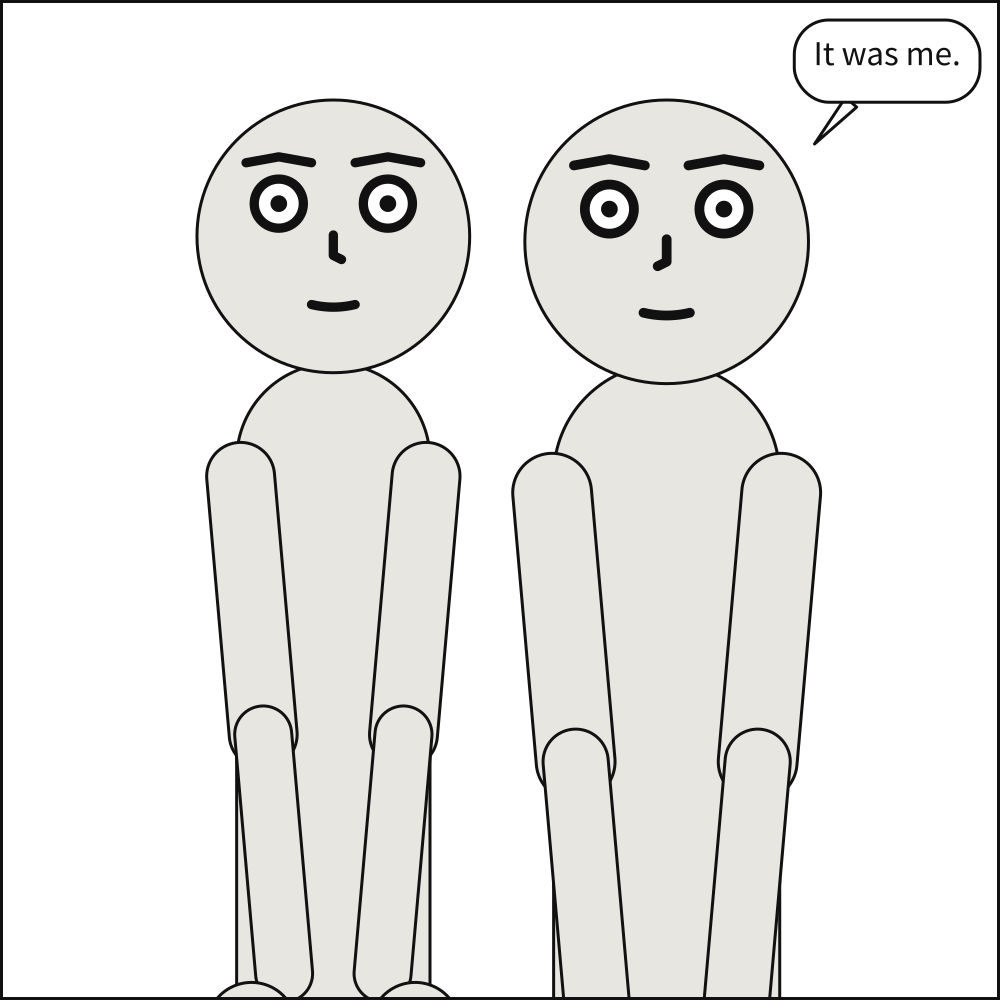
The tail of the balloon points at this actor’s mouth – the mouth anchor of their puppet, or of
the figure in a picture’s contract. A name not in the cast is unknown-actor, unless the line is
spoken from off panel, when it must not be in the cast: a line marked
off_panel by somebody who is drawn is off-panel-speaker.
cast:
  alice: {reference: alice, at: left_third}
  bob: {reference: bob, at: right_third, facing: left}
script:
  - say: {by: bob, text: "It was me."}
See also: cast, caption.by.
say.text#
The line, as one string; the compiler breaks it into lines. A word between underscores, _word_, is stressed, and lettered in bold italic.
Where |
A |
Type |
text |
Default |
none: required |
Since |
0.1 |
Diagnostics |
|
In the gallery |
text is never pre-wrapped by the author. Wrapping is computed from real font metrics during
compilation, because a balloon’s size determines whether it fits where it is wanted – so the
compiler must decide the line breaks before it can place anything.
A double dash, a dash or an ellipsis written as a word of its own – out --, ... maybe – is
never a place to break. Blambot sets one with no
space before or after it, so it belongs to its word: it stays on the line of the word before it,
or of the word after it when it opens the balloon. The space is still lettered as written. A line
of text, a caption and an actor id may not contain a control character other than tab, line feed
and carriage return: XML has no way to write one, so a panel holding one is refused with the
character named.
Emphasis. A word written between underscores is stressed, and lettered in bold italic, the
letterers’ convention: Blambot’s Comic Book Grammar & Tradition notes there is almost no plain
bold in comics dialogue. The underscore stands in for the underline a script uses, as Dark
Horse’s script format asks. It works the same in say and caption, in YAML and in a comic
script; in an italic caption the stressed word is bold italic too.
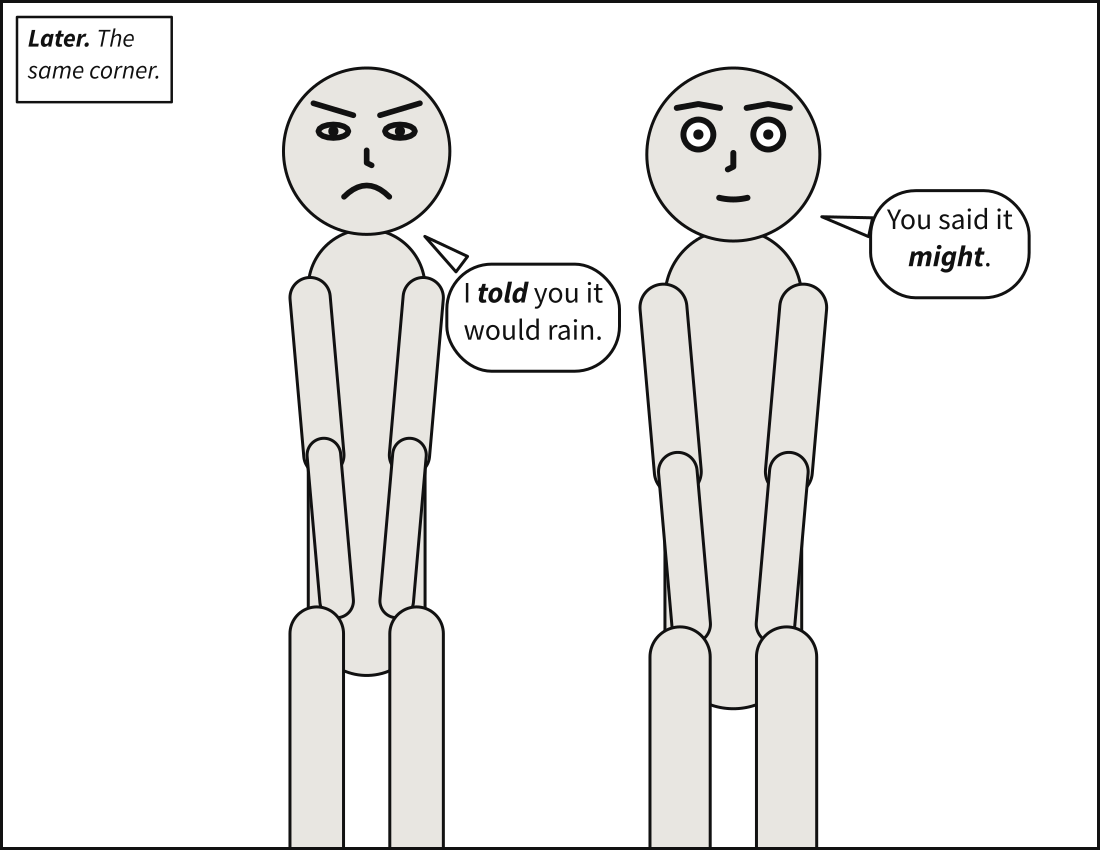
The stressed word is measured in bold italic, not just drawn in it, so it widens its balloon, or pushes the next word onto another line, by exactly as much as it is drawn wider. The rules are Markdown’s for an underscore:
An underscore opens emphasis when nothing alphanumeric is before it and something other than a space is after it. Inside emphasis, one closes it when something other than a space is before it and nothing alphanumeric is after it. A span may run across words:
_told you_.Any other underscore is just an underscore, so
file_nameand__init__are lettered as written, and\_writes one anywhere. In a double-quoted YAML string\_is YAML’s own escape for a no-break space, so write\\_there, or use single quotes.Emphasis opened and never closed is refused as
unbalanced-emphasis, located at the line, rather than guessed at.
Why not *told*. Markdown’s other marker starts an alias when it opens a YAML value:
text: *told* you does not parse at all. A document that trips on it is told to quote the value
and use underscores, but * is never read as emphasis, because it is also what a typed grawlix
such as @#*%! is made of. Panel Core keeps each line as the plain text it reads as, and records
where the face changes beside it; see Panel Core.
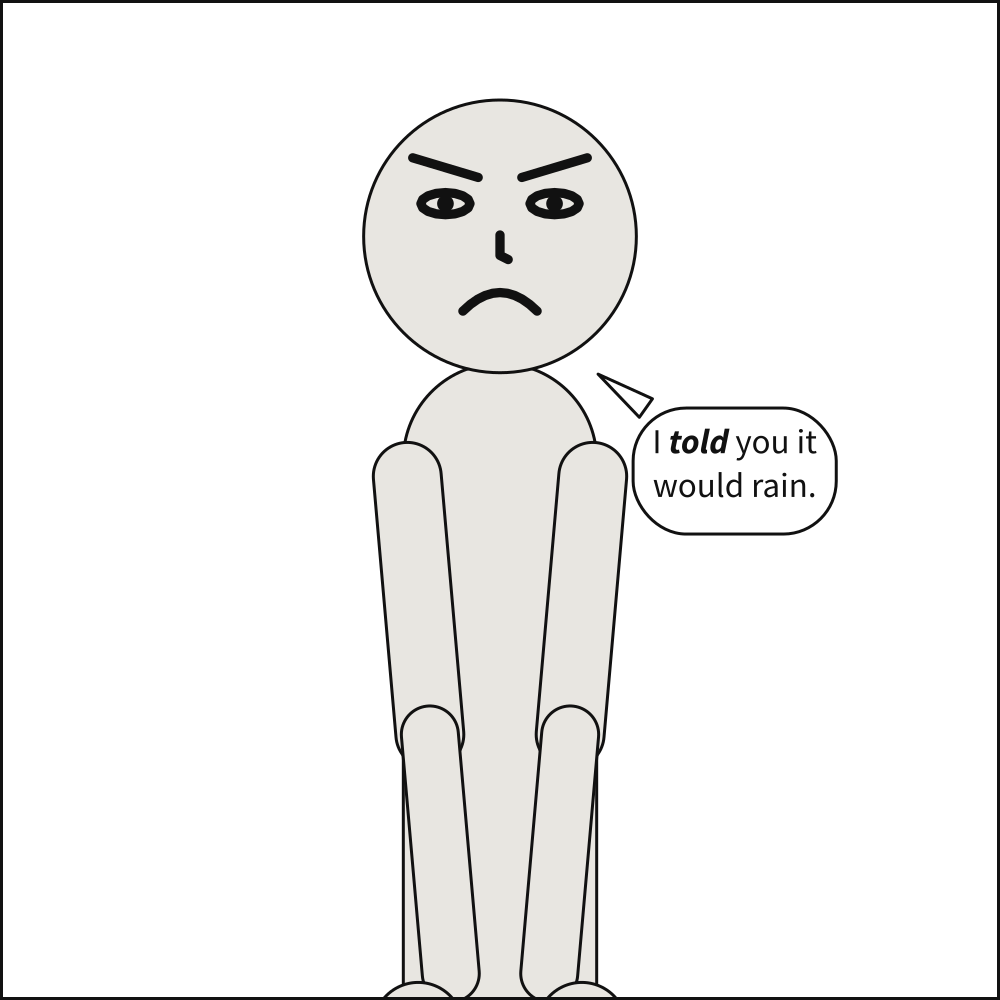
cast: {alice: {reference: alice, expression: angry}}
script:
  - say: {by: alice, text: "I _told_ you it would rain."}
See also: lettering.font.bold_italic,
lettering.size.
say.prefer#
Where the balloon would like to sit, one of nine zones of the panel. The weakest placement term: face avoidance and reading order override it.
Where |
A |
Type |
a name |
Values |
|
Default |
none |
Since |
0.1 |
Diagnostics |
|
In the gallery |
A zone is one of nine places in the panel: three across – left, center, right – in three
rows, top, middle and bottom. It is the weakest of all the placement terms: face avoidance,
the margin and reading order override it freely, and a balloon is placed elsewhere rather than
cover a face to sit in its zone. Left out, a balloon sits where its speaker and the line before it
leave room, which is usually high.
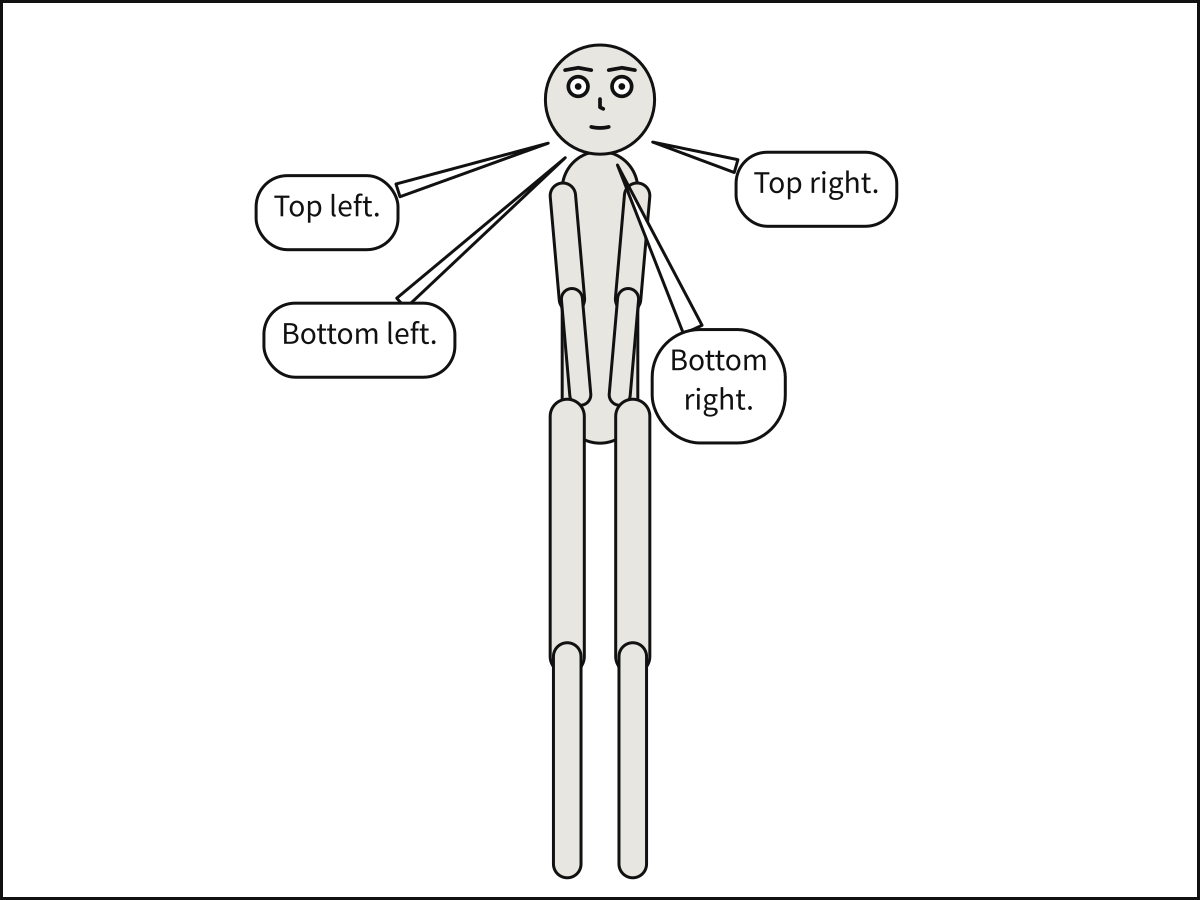
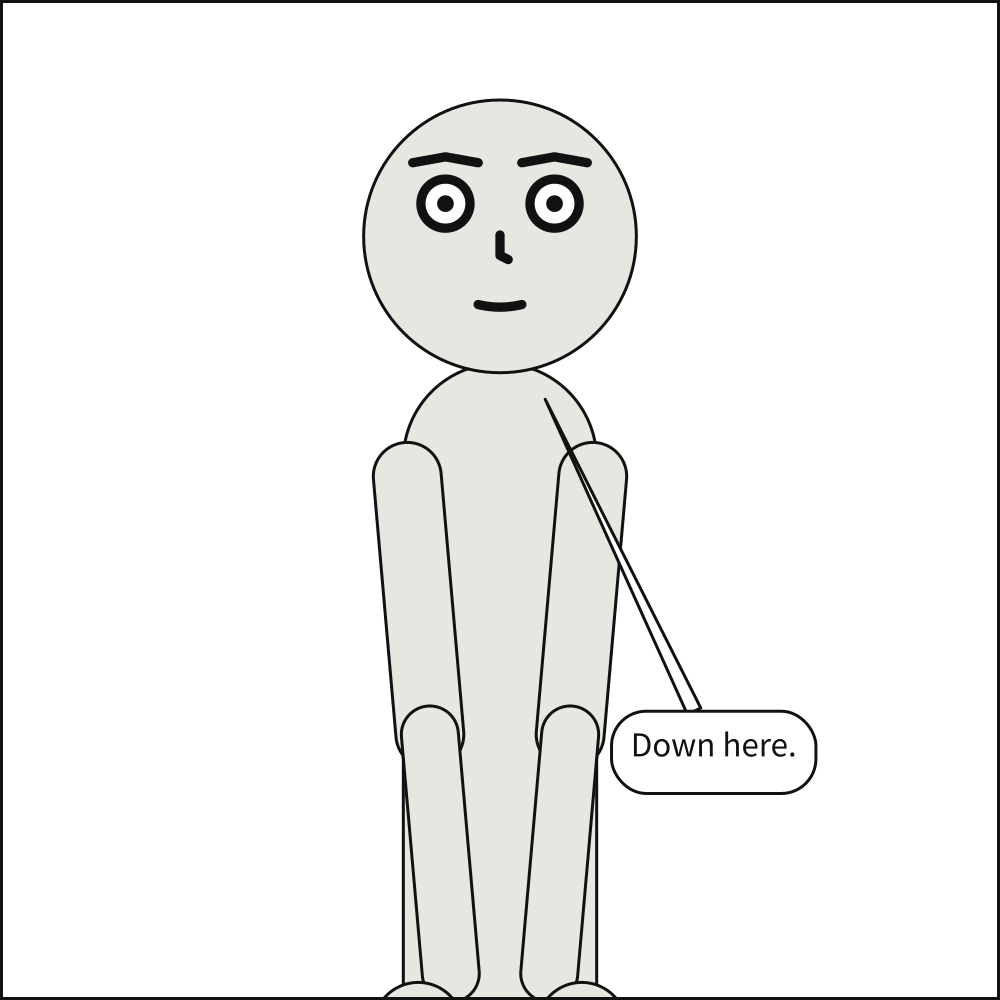
cast: {alice: {reference: alice}}
script:
  - say: {by: alice, text: "Down here.", prefer: bottom_right}
See also: caption.prefer, sfx.prefer.
say.kind#
The balloon the line is carried in: speech, thought, whisper or shout.
Where |
A |
Type |
a name |
Values |
|
Default |
|
Since |
0.1 |
Diagnostics |
|
In the gallery |
The kind changes the outline and the tail, never the placement: a whisper is held to exactly the same face avoidance and reading order as a shout.
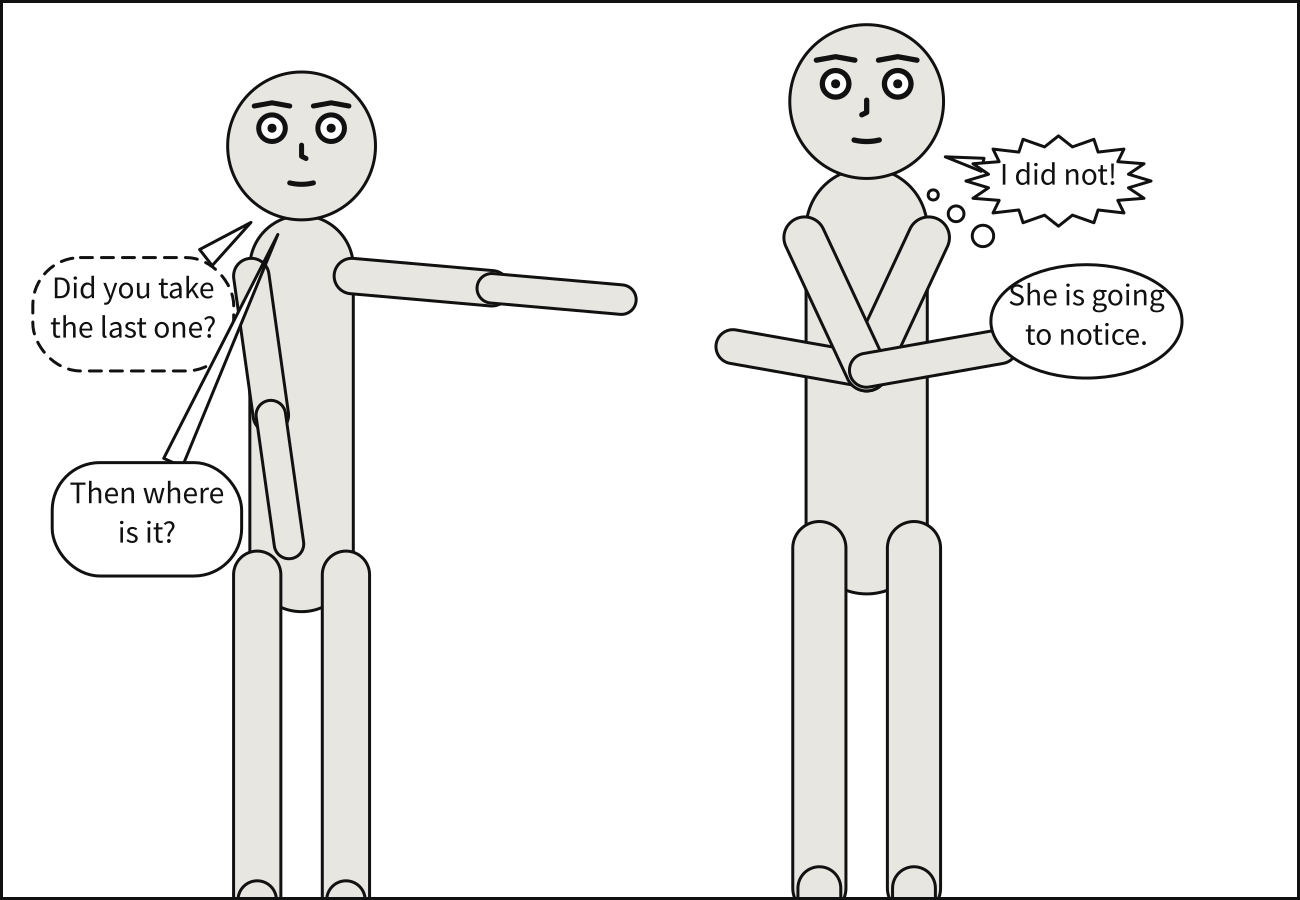
Kind |
Outline |
Tail |
|---|---|---|
|
rounded rectangle |
tapered pointer |
|
ellipse |
trail of bubbles |
|
dashed rounded rectangle |
tapered pointer |
|
jagged burst |
tapered pointer |
A monologue caption is the other way to letter an inner voice, and has largely replaced the
thought balloon in modern comics. Both are correct: they are different eras of one convention.
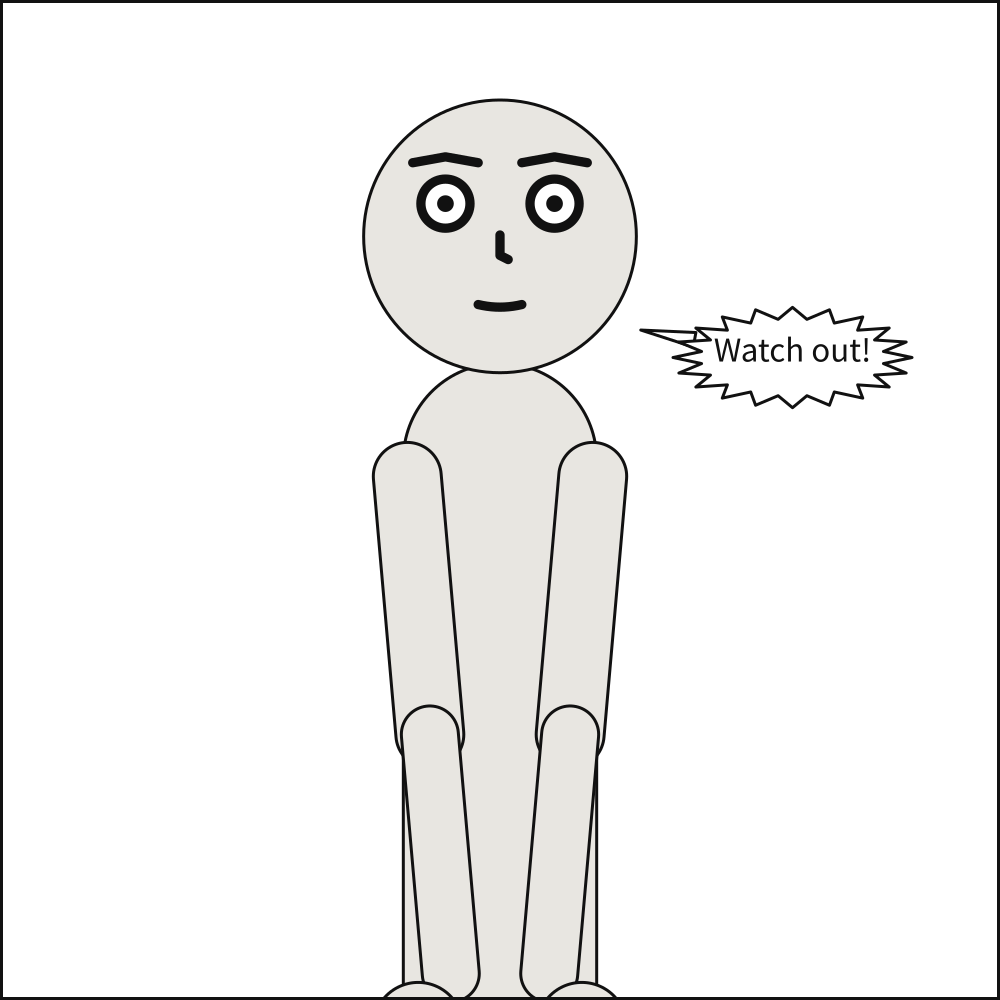
cast: {alice: {reference: alice}}
script:
  - say: {by: alice, text: "Watch out!", kind: shout}
See also: caption.kind.
say.size#
small for a line muttered, said under the breath or weakly: smaller type, in a balloon that keeps its room.
Where |
A |
Type |
a name |
Values |
|
Default |
|
Since |
0.11 |
Diagnostics |
Dark Horse lists “(small)” and “(weak)” among the common indications for modified lettering.
Blambot: a reduced size is used when a character mutters, says something to themself, or speaks
sheepishly. So small is smaller type in the balloon the line would have had, which reads as
quieter rather than as a smaller balloon.
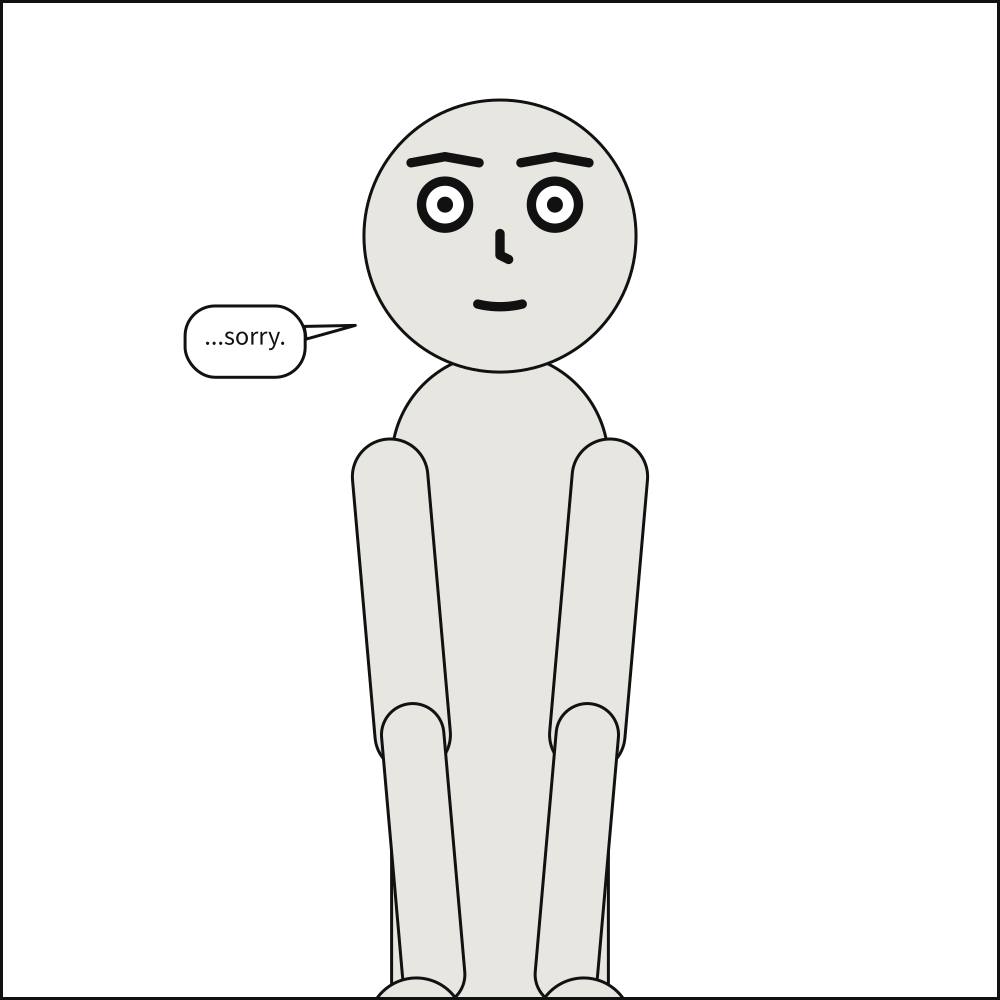
cast: {bob: {reference: bob}}
script:
  - say: {by: bob, text: "...sorry.", size: small}
See also: lettering.size, the size small is smaller than.
say.off_panel#
The speaker is outside the panel: true, or the side of the frame they are on. The tail ends on the frame there.
Where |
A |
Type |
|
Values |
|
Default |
|
Since |
0.11 |
Diagnostics |
|
In the gallery |
A speaker who is not drawn has no mouth to point at, so their balloon’s tail ends on the frame, on
their side – Blambot: “the tail of the balloon generally butts against the panel border”. Name the
side, or write off_panel: true and the compiler takes the nearer of left and right to where it
put the balloon – which it puts high on the side reading starts from, top left, or top right in a
comic read right to left. A side you name is a side of the panel, whichever way it is read. Top and
bottom are only ever named: balloons sit high, so “the nearest edge” would aim most tails at the
top border, which reads as a speaker above.
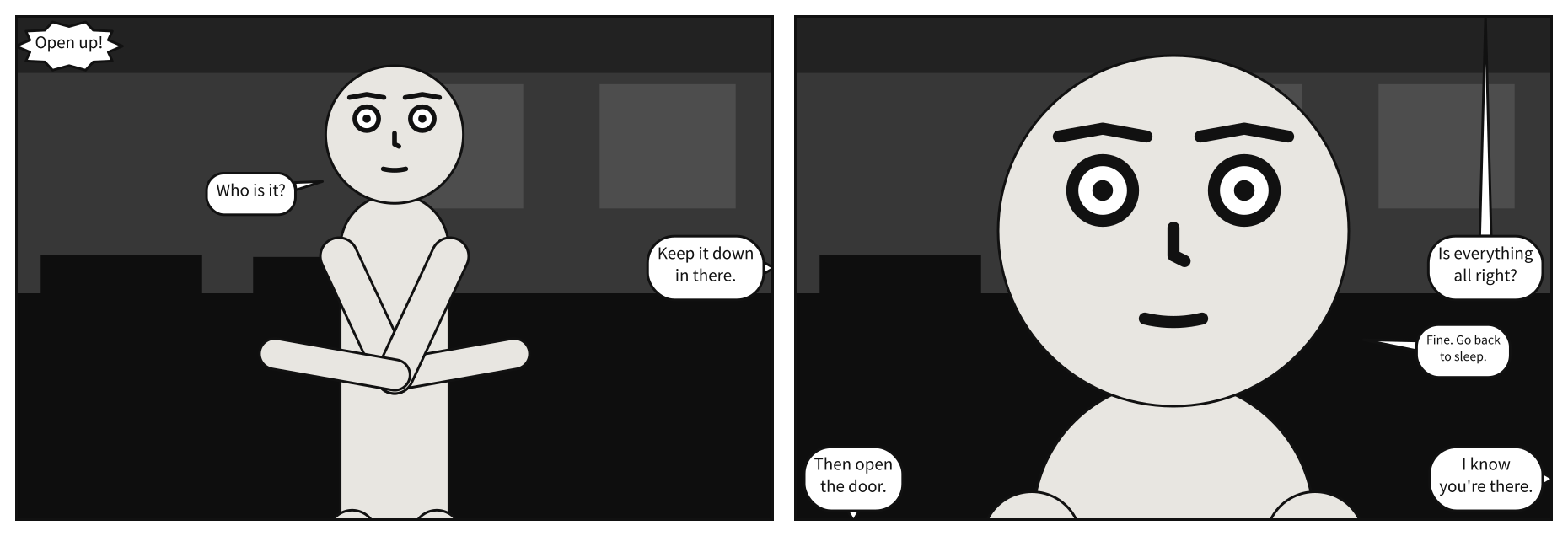
The balloon is placed as a caption is – no mouth to stay near – under the same rules: never over a face, inside the margin, in reading order. Its tail reaches past the margin to the frame itself, or to the panel’s outline when it is slanted.
Somebody heard from off panel may be looked at, and by looking_at only – nothing else can be
staged against a figure nobody draws. bob looking_at carol turns Bob toward Carol’s side of the
frame, left or right, and aims his eyes straight out of it, up or down for top and bottom. With
off_panel: true and no side named, Carol is heard from the side Bob faces, so the tail and his
look agree.
A panel that shares a cast, through over: or a scene’s defaults, leaves a member out with null:
cast: {carol: null}, and Carol is not drawn there – so she may speak from off panel in it. Of the
relations the panel shares that name her, bob looking_at carol still holds while she does, and her
off_panel: true ends on the side she was written to stand on, at: left_third being the left,
unless her line names one; every other relation goes. A comic script does it with (OP).
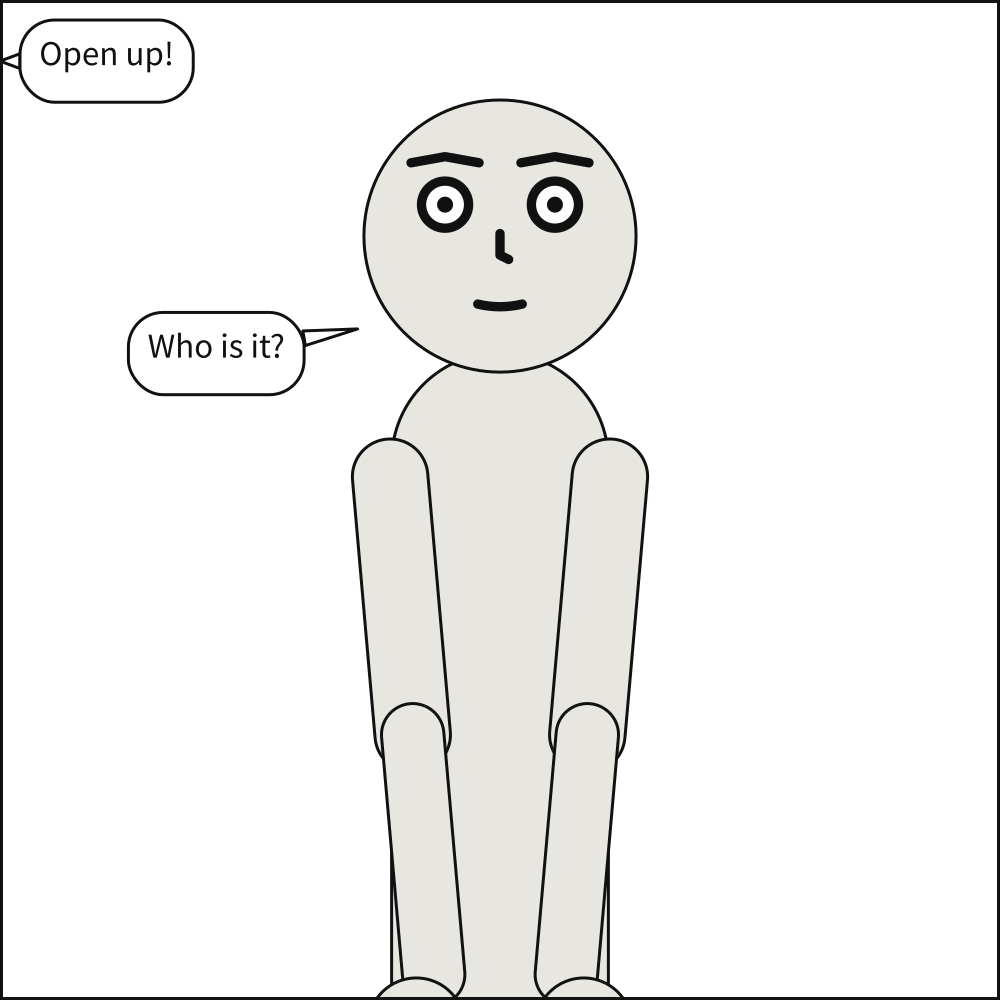
cast: {bob: {reference: bob}}
script:
  - say: {by: caller, text: "Open up!", off_panel: left}
  - say: {by: bob, text: "Who is it?"}
See also: staging[].object, null.
caption#
A caption: a box in which the panel speaks in its own voice, with no tail.
Where |
A |
Type |
a mapping |
Default |
none |
Since |
0.4 |
Diagnostics |
A caption is the panel speaking in its own voice. It is what lets a panel say where and when it happens without a character having to explain it out loud – which is the thing writers are told not to do. Comics solved this long before they had reliable backgrounds.
It is placed by the same machinery as balloons – the same face avoidance, the same silhouette cost, the same hard reading order – because the placement principles for floating text are the ones the balloon solver already implements. What differs is the pull toward the frame: a balloon mildly dislikes hugging the panel edge, and a caption is looking for exactly that corner. A caption has no tail and no speaker to point at, which is why it is not a fifth kind of balloon.
Text is set flush left. This is a convention, not a rule the way reading order is: the lettering references describe left alignment as the norm while calling it a house preference. Balloons, by contrast, centre their text. Both hold in a comic read right to left: its text still reads left to right.
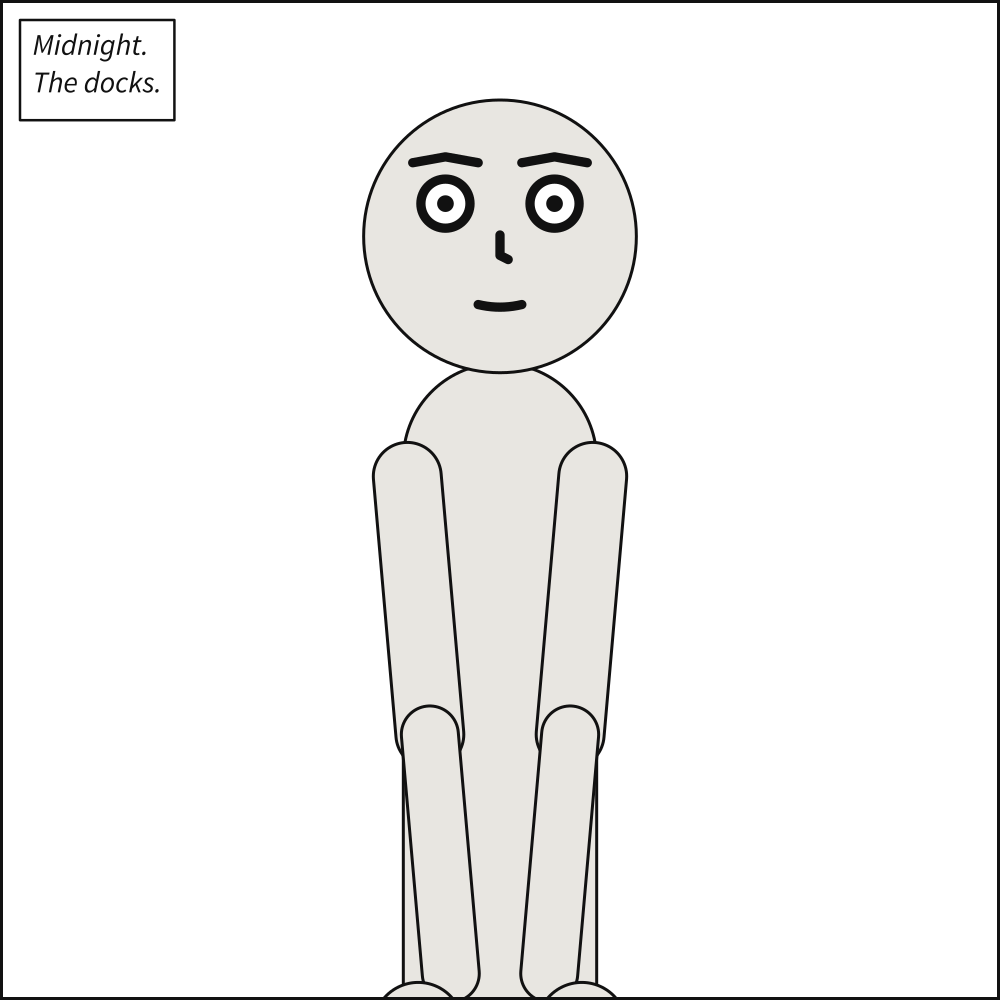
cast: {alice: {reference: alice}}
script:
  - caption: {text: "Midnight. The docks."}
See also: say.
caption.text#
What the box says, as one string; line breaks are computed. A word between underscores, _word_, is stressed.
Where |
A |
Type |
text |
Default |
none: required |
Since |
0.4 |
Diagnostics |
|
As for dialogue, line breaking is computed, and a word between underscores is stressed; see
say.text. Captions are lettered at 30 parts in 35 of the dialogue size.
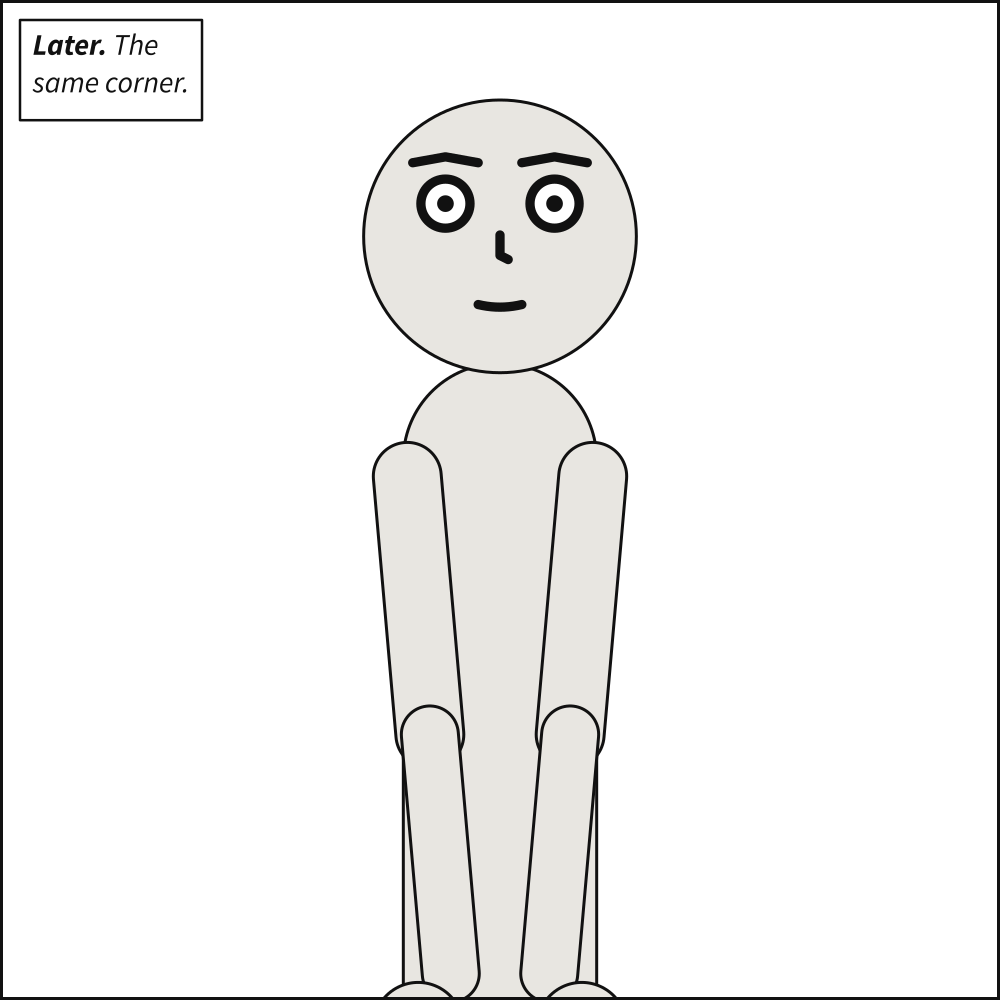
cast: {alice: {reference: alice}}
script:
  - caption: {text: "_Later._ The same corner."}
See also: lettering.size.
caption.kind#
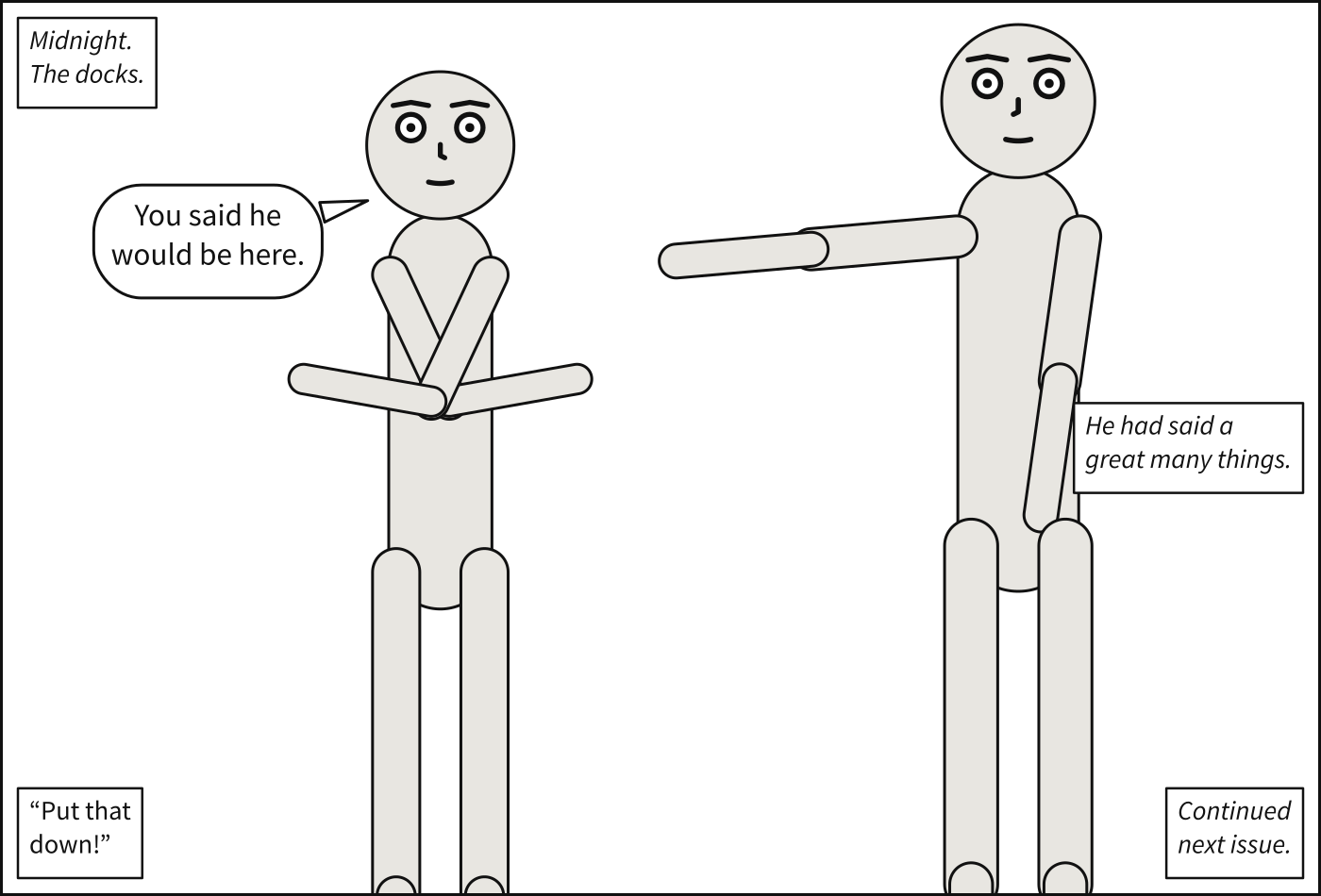
What the box is doing: locale for a place and time, monologue for an inner voice, spoken for speech from off panel, editorial for the writer’s voice.
Where |
A |
Type |
a name |
Values |
|
Default |
|
Since |
0.4 |
Diagnostics |
|
In the gallery |
The four kinds are the letterers’ own vocabulary, taken from Blambot’s Comic Book Grammar & Tradition rather than invented – for the same reason the predicates were taken from Visual Genome. Note that “narration”, the obvious guess, is not one of them.
Kind |
What it is |
How it is set |
|---|---|---|
|
Location and time – “Midnight. The docks.” |
Italic |
|
A character’s inner voice |
Italic |
|
Off-panel dialogue |
Roman, in quotation marks |
|
The voice of the writer or editor |
Italic |
cast: {alice: {reference: alice}}
script:
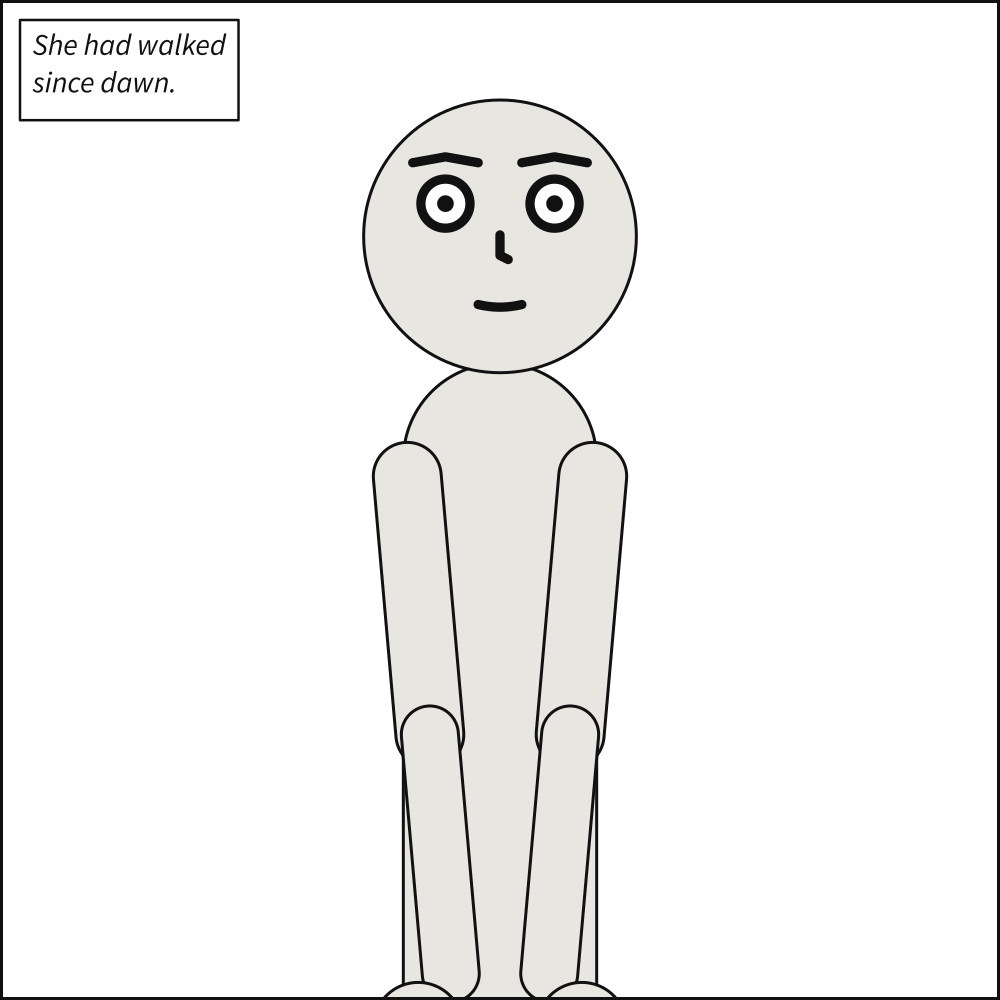
  - caption: {text: "She had walked since dawn.", kind: monologue}
See also: caption.by, say.kind.
caption.tone#
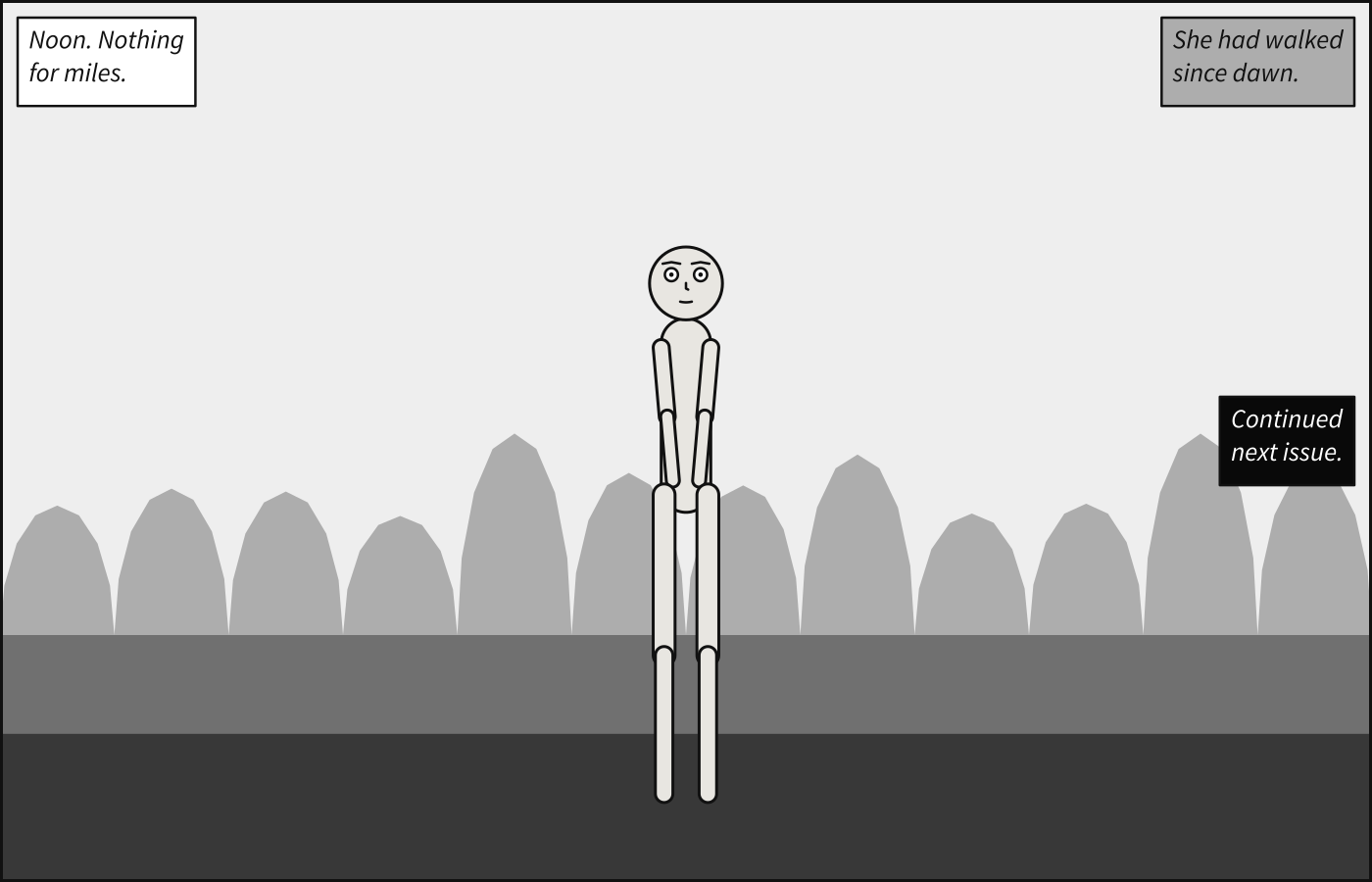
What the box is filled with: paper, pale, ink, which is lettered in paper, or warm, yellow under palette: tinted.
Where |
A |
Type |
a name |
Values |
|
Default |
|
Since |
0.6 |
Diagnostics |
|
In the gallery |
A caption box is opaque, so its lettering is never the thing at risk – the text sits on the fill
whatever is behind it. What a tone changes is whether the box reads. Against the value ladder
the setting block produces, a white box on a noon sky is 1.16:1: legible, and invisible.
Tone |
Fill |
Where it comes from |
Lettered in |
|---|---|---|---|
|
|
the paper the panel is printed on – the default |
ink |
|
|
the |
ink |
|
|
the |
paper |
|
|
the |
ink |
Three of the four are rungs of the ladder in solve/backdrop.py, taken by index rather than
restated as literals, so lettering and backdrop cannot drift apart as either is tuned. A tone is
fixed, not a function of the panel’s time: a caption’s value is a property of the caption.
ink produces what letterers call reversed type, and the inversion is decided by the compiler,
by contrast, and travels in Panel Core as a resolved value – the same rule as falling rain, which
is inked over a bright sky and papered over a dark one.
Two floors, and only the first is a rule every tone must meet:
Lettering, 4.5:1. A caption’s text against its own fill, WCAG AA for body text. Every tone clears it with room – 18.9:1, 8.4:1, 19.9:1 and 16.3:1 respectively, and
warm16.4:1 on its yellow.Separation, 3:1. The box against the plane behind it. No tone is required to clear this on every rung, and the default does not: white on a noon sky is the case that motivated the feature. What the palette owes you is an escape from every background the compiler can produce – at least one tone above 3:1 for every rung of every hour – and that is what the test suite checks.
warm is the classic yellow locale caption. Its value is a rung of the ladder like the others,
and its lettering is chosen on that grey; under palette: tinted its box is
drawn in the grey’s twin, the pale yellow #fef0a1, of the same lightness. In mono it is the
grey, which is what a black-and-white reprint does to a yellow caption. paper, pale and ink
stay neutral in every palette. There is no free-form fill:: an open colour field would be this
language’s one open vocabulary and would let you produce an unreadable box.
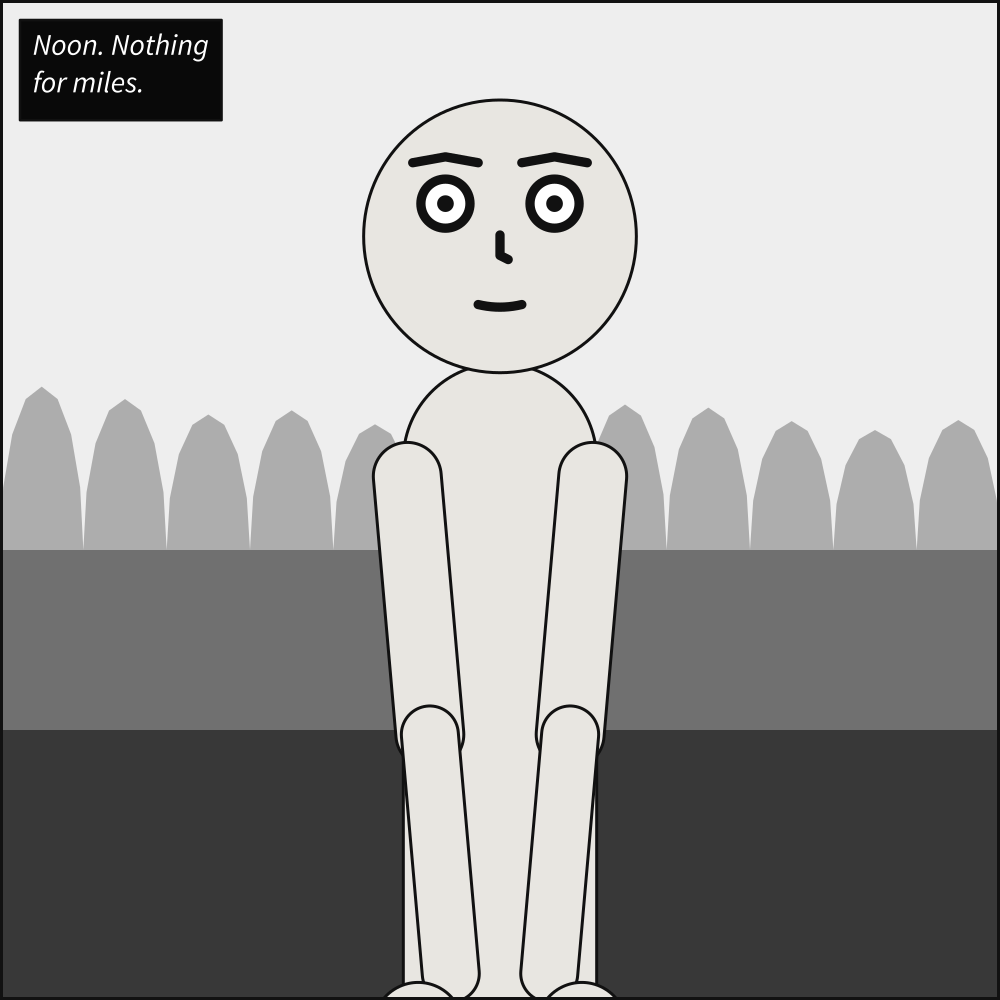
setting: {place: field, time: day}
cast: {alice: {reference: alice}}
script:
  - caption: {text: "Noon. Nothing for miles.", tone: ink}
See also: setting.time, palette.
caption.prefer#
Where the box would like to sit, one of nine zones of the panel. Left out, where reading starts: top_left, or top_right read right to left.
Where |
A |
Type |
a name |
Values |
|
Default |
none |
Since |
0.4 |
Diagnostics |
The same nine zones as a balloon’s prefer, and as weak. Left out, a caption goes
where a locale caption conventionally does: where reading starts, the top left, or the top right
in a comic read right to left.
cast: {alice: {reference: alice}}
script:
  - caption: {text: "Continued next issue.", kind: editorial, prefer: bottom_right}
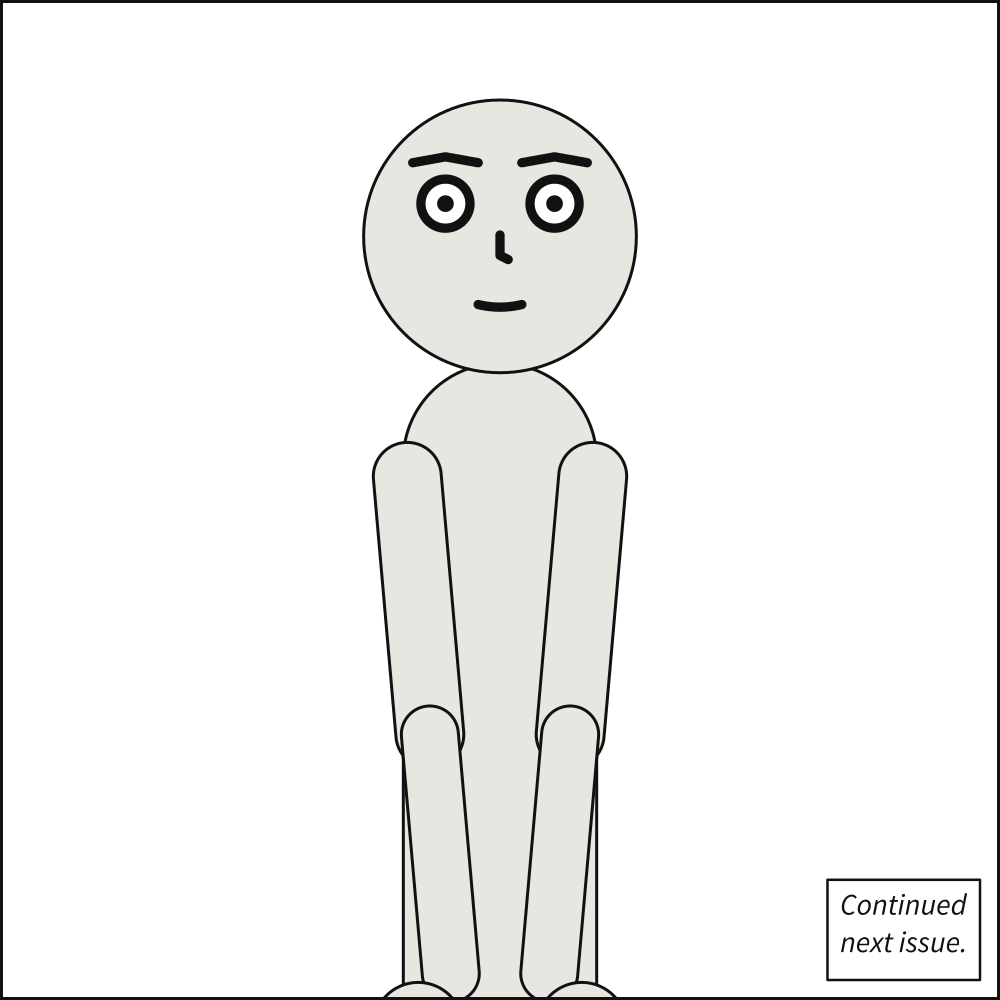
See also: direction.
caption.by#
Who is speaking, for a spoken caption only: any name, in the cast or not.
Where |
A |
Type |
text |
Default |
none |
Since |
0.4 |
Diagnostics |
by is the one place an actor id is allowed not to resolve. Everywhere else, naming somebody
who is not in cast is an error. A spoken caption’s speaker is off panel by definition, so
requiring them to be cast would defeat the purpose. It is accepted only on spoken; on any other
kind it is caption-speaker.
Quotation marks are applied by the compiler, not by you. In a run of consecutive spoken
captions by one speaker, each opens with a quote and only the last one closes – the run is one
continuous line of off-panel speech, and closing every box would read as a series of
interruptions. A change of speaker ends the run, so each speaker’s last box closes, as Blambot
asks. Write the words; the marks are lettering.
cast: {alice: {reference: alice}}
script:
  - caption: {text: "Don't look back.", kind: spoken, by: mother}
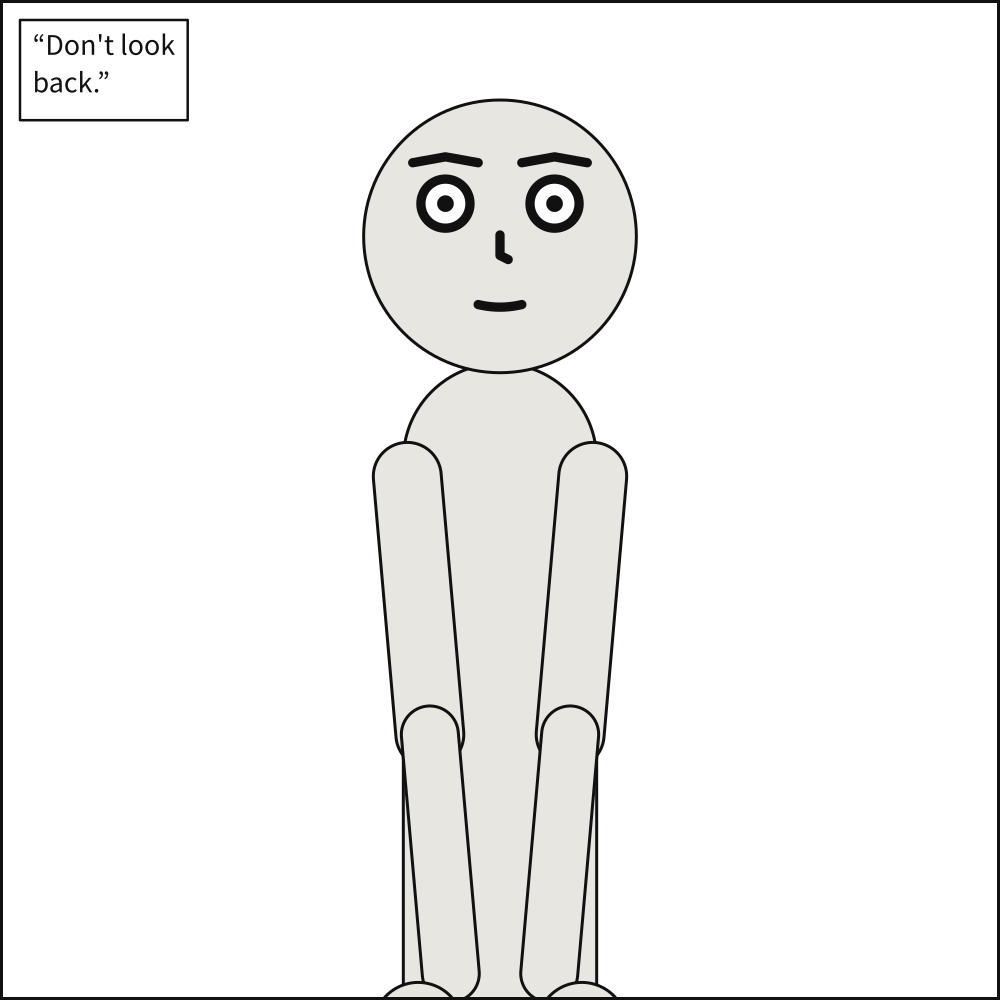
See also: say.off_panel, a balloon spoken from off panel.
sfx#
A sound effect: letters lettered into the picture, with no balloon.
Where |
A |
Type |
a mapping |
Default |
none |
Since |
0.11 |
Diagnostics |
|
In the gallery |
A sound effect is letters treated as picture. BLAM is not dialogue: comics letter sound big,
angled and outlined, near where it happens, with no balloon. It is lettered in the display
face, Bangers unless lettering.font.display names
another. A solid effect is ink with a paper outline around every letter, so it reads over light art
and dark alike. The arc and the rotation are applied to the glyph outlines, so they come out the
same in every viewer.
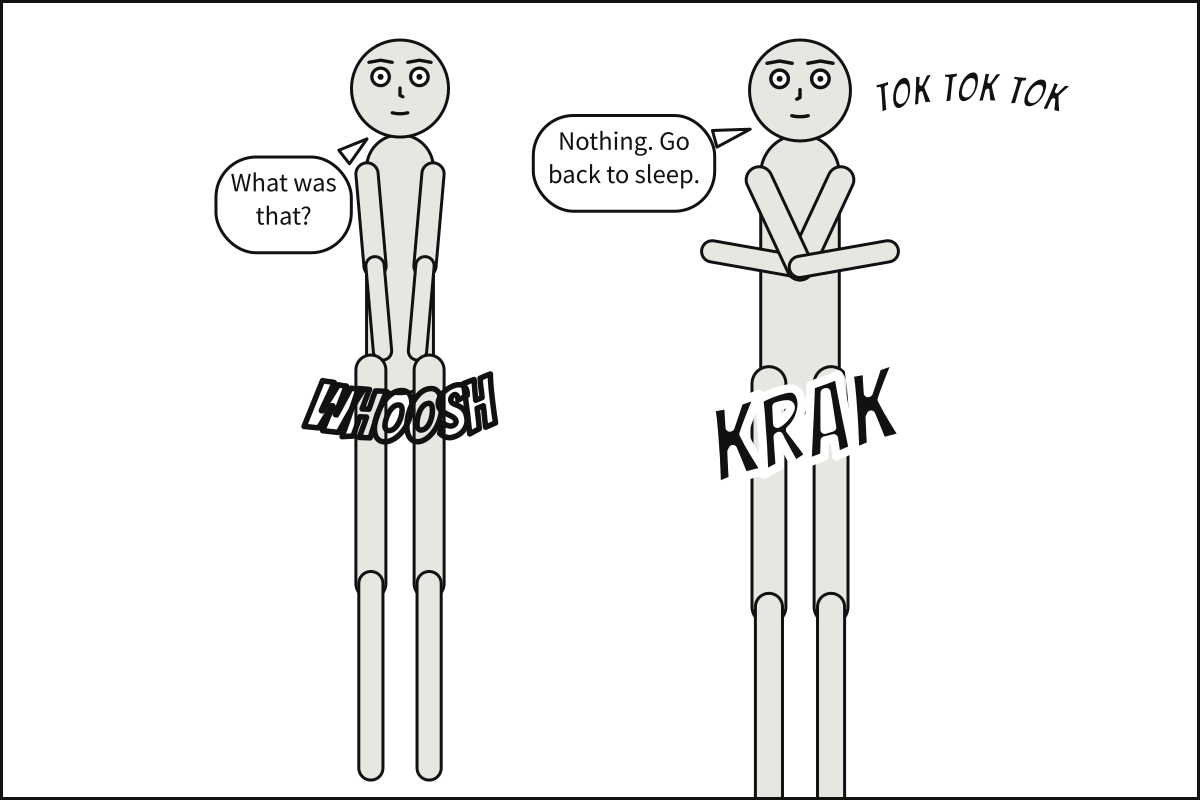
It is placed, never positioned. As with every box, the compiler tries candidate positions –
around the actor it comes from, around the zone it prefers, the middle of every zone – and keeps
the cheapest. It never covers a face, never leaves the panel or lies under an inset, and two
effects never overlap; it may cover a figure, and prefers its own source’s to anyone else’s. When
nothing fits, it is sfx-placement.
Balloons pay to cover it, and nobody moves for it. Effects are placed before any balloon or caption, since they are part of the picture; a balloon or caption then pays to cover one, exactly as it pays to cover emanata, and is never forbidden to. No figure and no framing changes.
cast:
  alice: {reference: alice, at: left_third}
  bob: {reference: bob, at: right_third, facing: left}
script:
  - say: {by: alice, text: "Get down!"}
  - sfx: {text: BLAM, from: bob, size: large, rotate: -14}
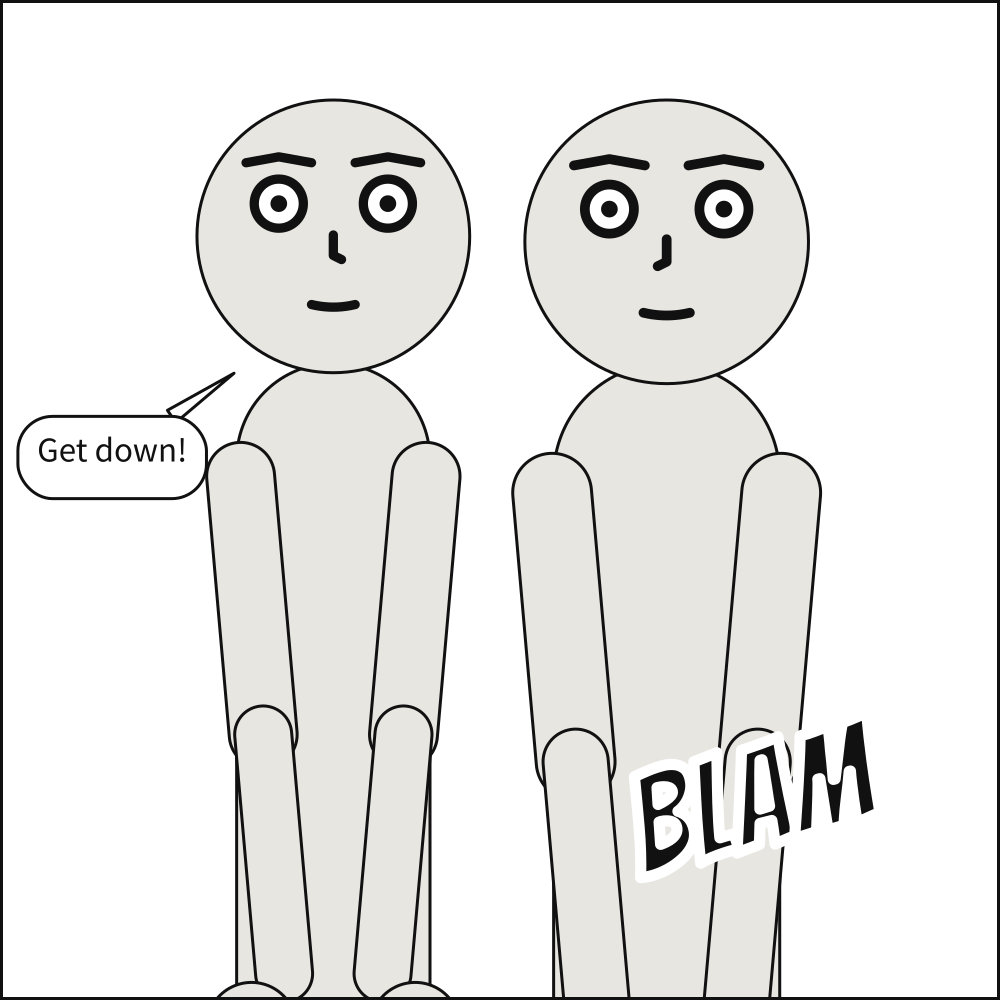
See also: cast.<id>.marks, the other picture a balloon pays to cover.
sfx.text#
The sound, lettered exactly as written, in the display face.
Where |
A |
Type |
text |
Default |
none: required |
Since |
0.11 |
Diagnostics |
Nothing is added to the text: no exclamation mark, since sound effects are not exclamations, and no emphasis – an underscore here is just an underscore. Write it in capitals or not, as the sound should read.
cast: {alice: {reference: alice}}
script:
  - sfx: {text: tok tok tok, size: small}
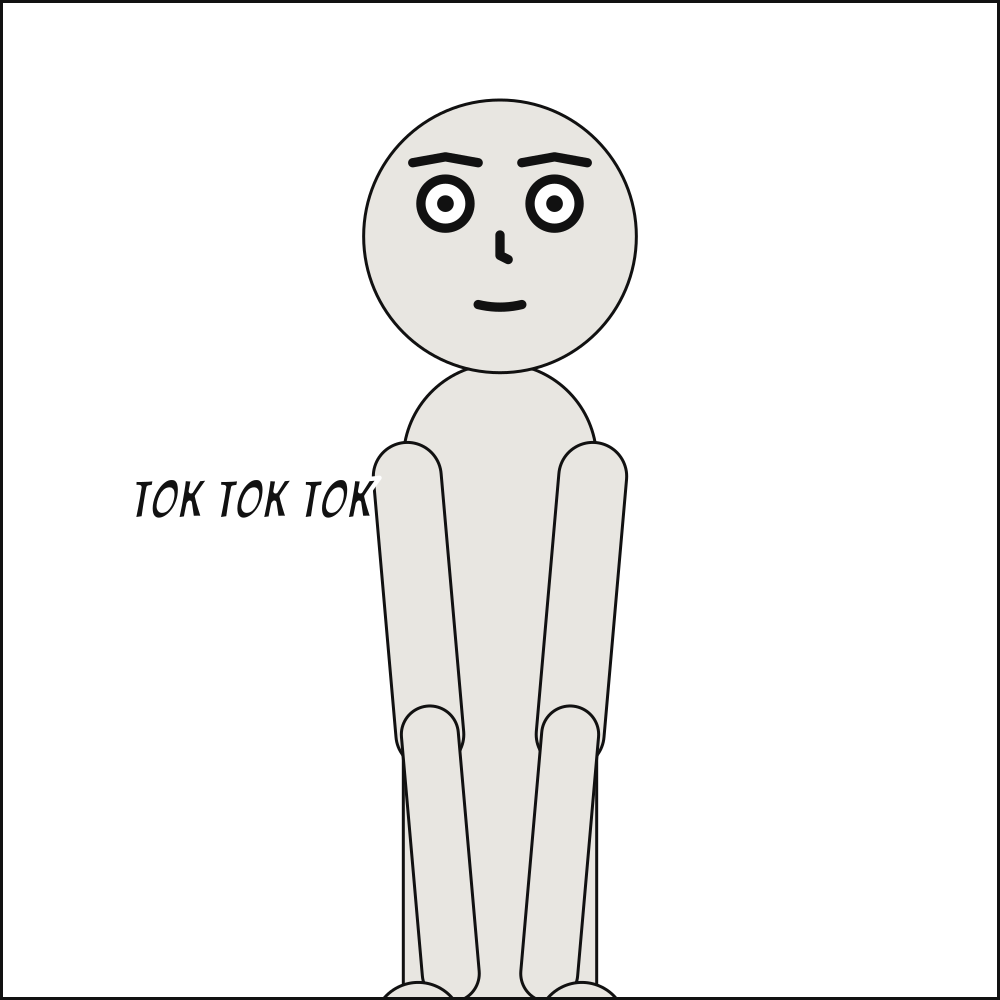
See also: sfx.size.
sfx.from#
Written from: the actor id the sound comes from, which it is placed near.
Where |
A |
Type |
text |
Default |
none |
Since |
0.11 |
Diagnostics |
Written from, the actor the sound comes from. The effect is tried around them first, and prefers
to cover its own source’s figure over anyone else’s. Left out, the effect is placed by its
prefer, or anywhere it fits.
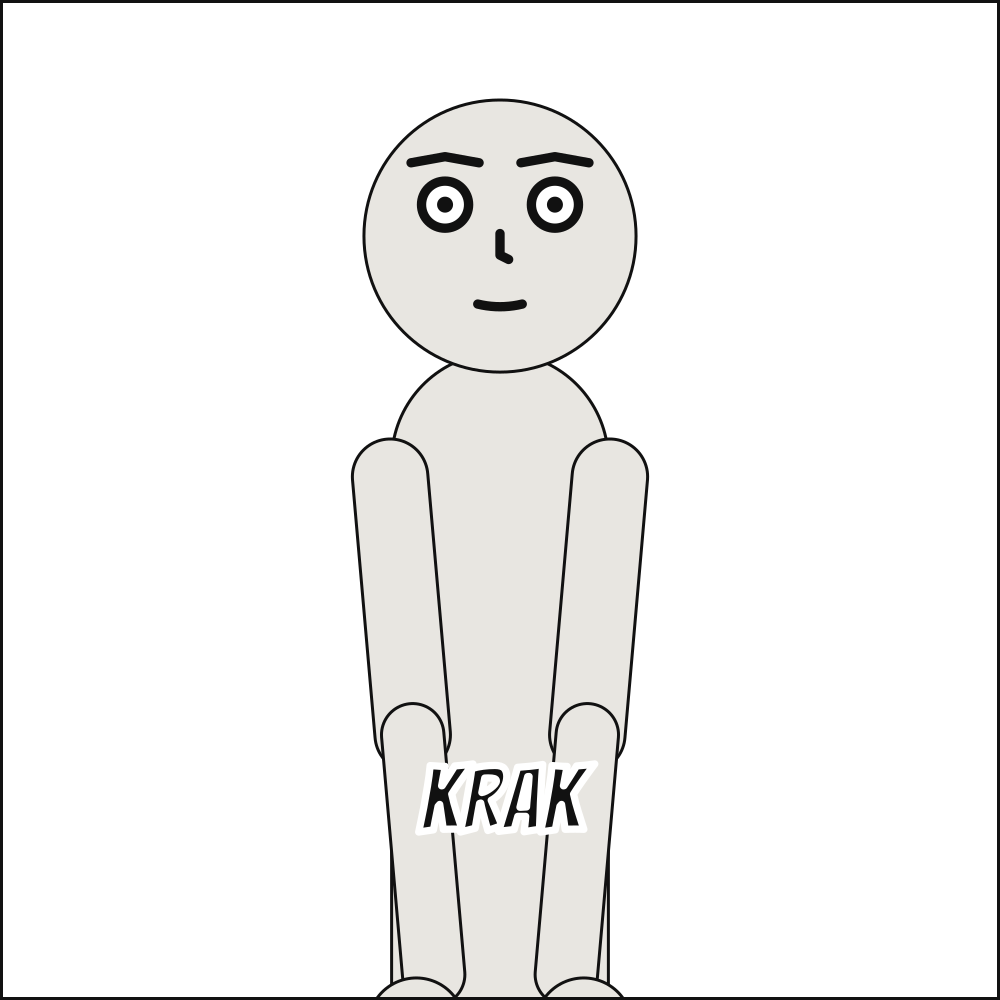
See also: sfx.prefer.
sfx.prefer#
Where the effect would like to sit, one of nine zones of the panel: on its own, or as a pull on an effect that has a from.
Where |
A |
Type |
a name |
Values |
|
Default |
none |
Since |
0.11 |
Diagnostics |
|
In the gallery |
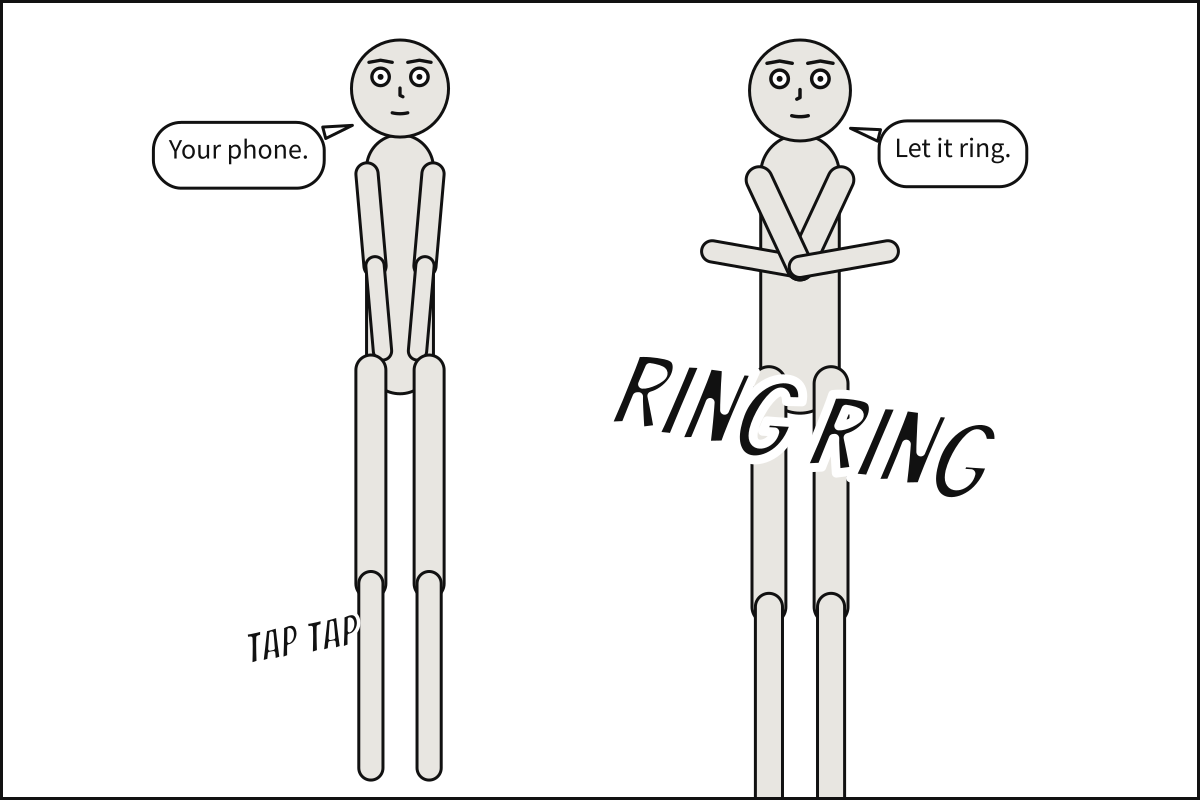
With no from, the zone the effect would like to sit in. With one, a pull: the effect stays near
its source and leans toward the zone.
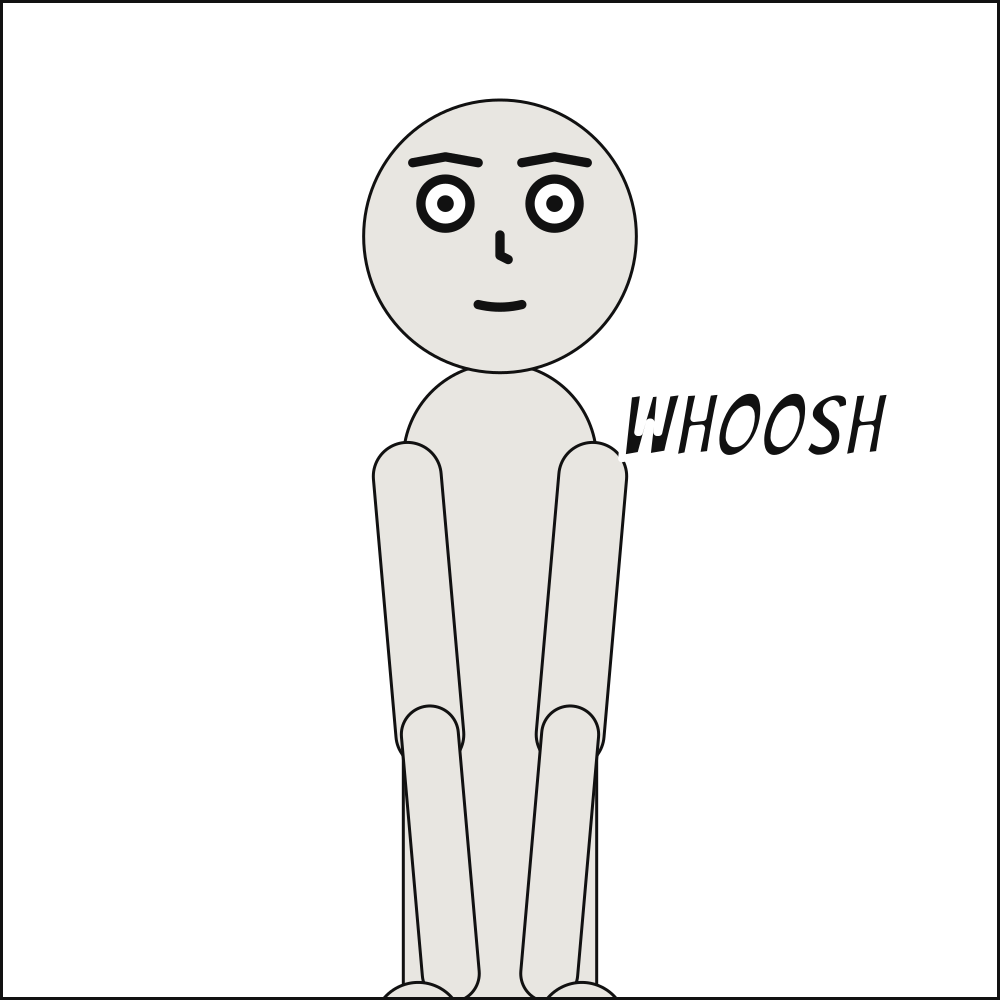
cast: {alice: {reference: alice}}
script:
  - sfx: {text: WHOOSH, from: alice, prefer: top_right}
See also: say.prefer, every zone.
sfx.size#
How loud: small, medium or large, lettered at 1.6, 2.6 or 4 times the dialogue type size.
Where |
A |
Type |
a name |
Values |
|
Default |
|
Since |
0.11 |
Diagnostics |
A multiple of the type size, not of the figure, so an effect reads at a long shot as well as at a close-up: a sound does not get quieter because the camera stepped back. Three steps, not a number, for the reason every other size in the language is named – the author says how loud, the compiler says how big.
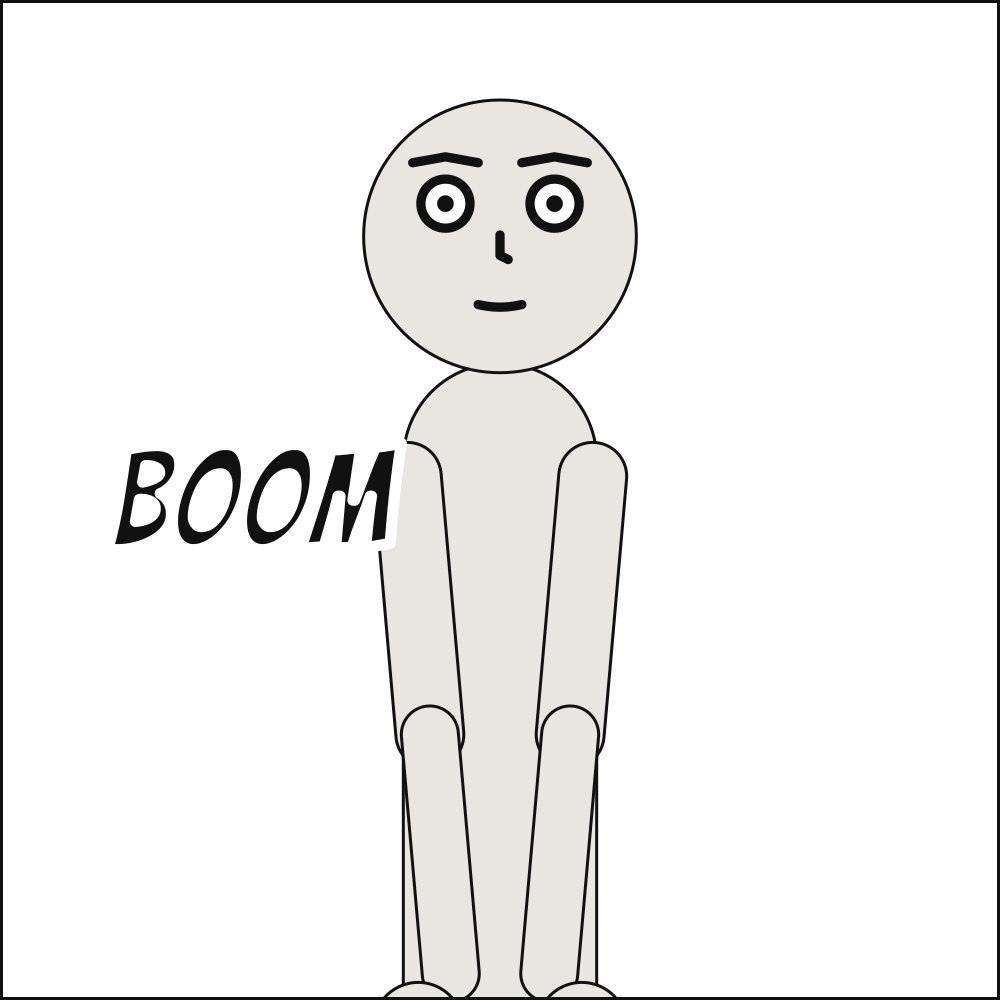
See also: lettering.size.
sfx.rotate#
How far the effect is turned clockwise, in degrees, from -45 to 45.
Where |
A |
Type |
a number |
Values |
-45 to 45 |
Default |
|
Since |
0.11 |
Diagnostics |
Comics angle their sound effects; the default is level, and the angle is the author’s. Positive turns the effect clockwise, negative the other way.
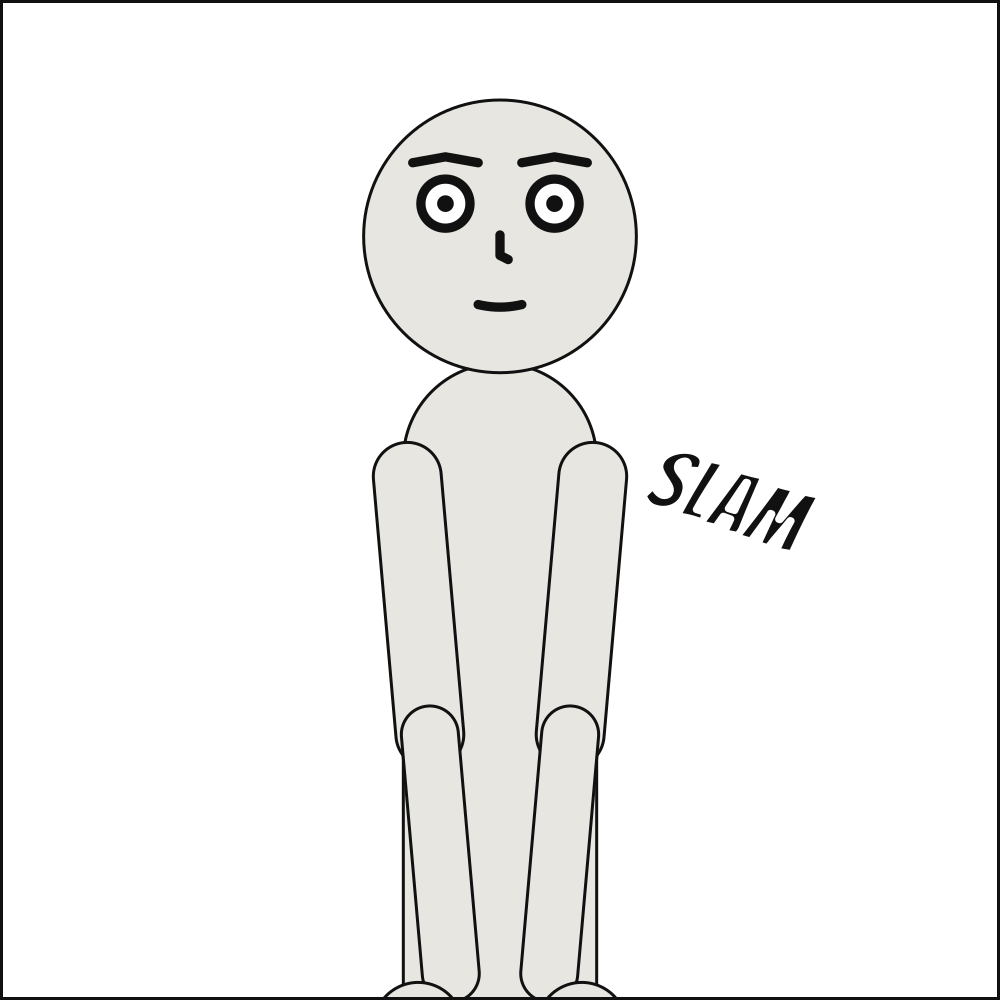
See also: sfx.arc.
sfx.arc#
How far the line of letters bends, in degrees, from -120 to 120: positive bows its middle up, negative down.
Where |
A |
Type |
a number |
Values |
-120 to 120 |
Default |
|
Since |
0.11 |
Diagnostics |
The line of letters bends through this many degrees: positive bows its middle up, negative down. The letters are bent as outlines, each set along the curve.
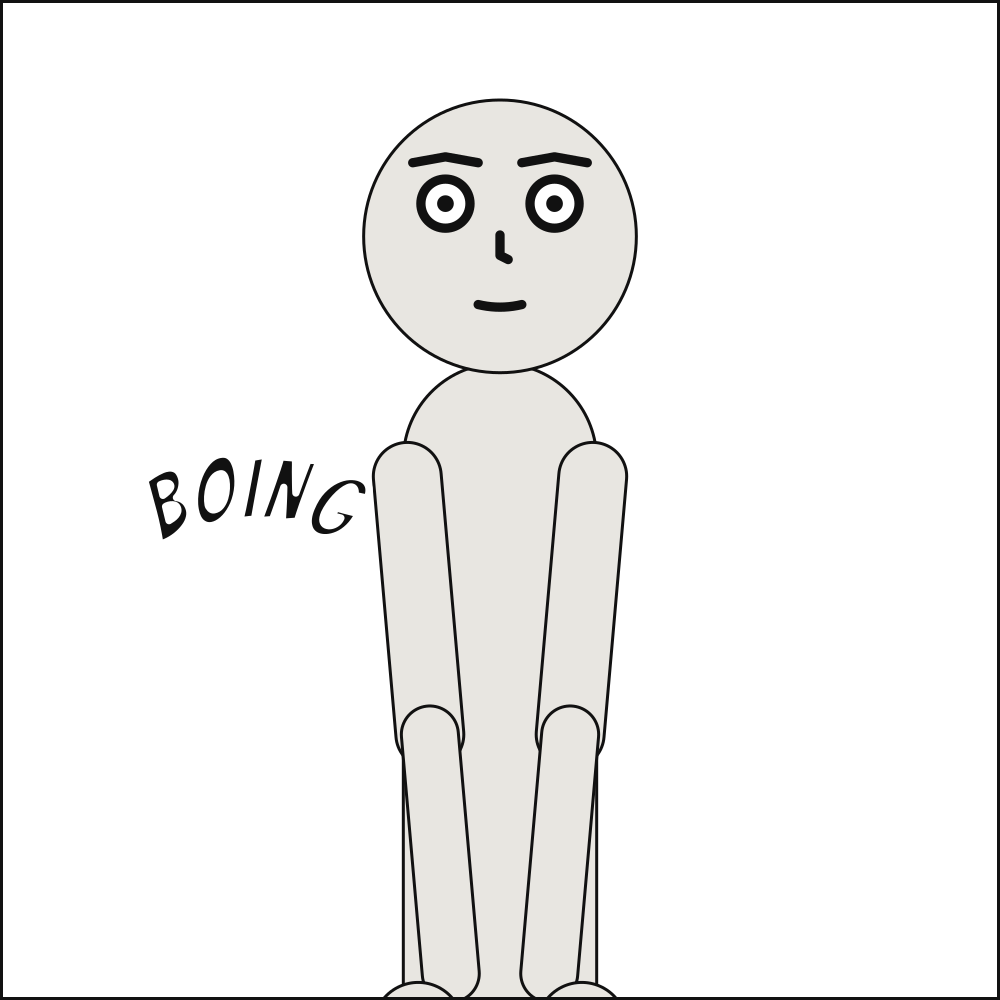
See also: sfx.rotate.
sfx.hollow#
true letters the effect as an outline with no fill, so the art shows through: an open effect.
Where |
A |
Type |
|
Default |
|
Since |
0.11 |
Diagnostics |
An open effect is all outline, in ink, and no fill, so the art behind shows through the letters – what letterers draw for a sound that should not hide the picture.
setting: {place: street, time: night}
cast: {alice: {reference: alice}}
script:
  - sfx: {text: WHOOSH, hollow: true}
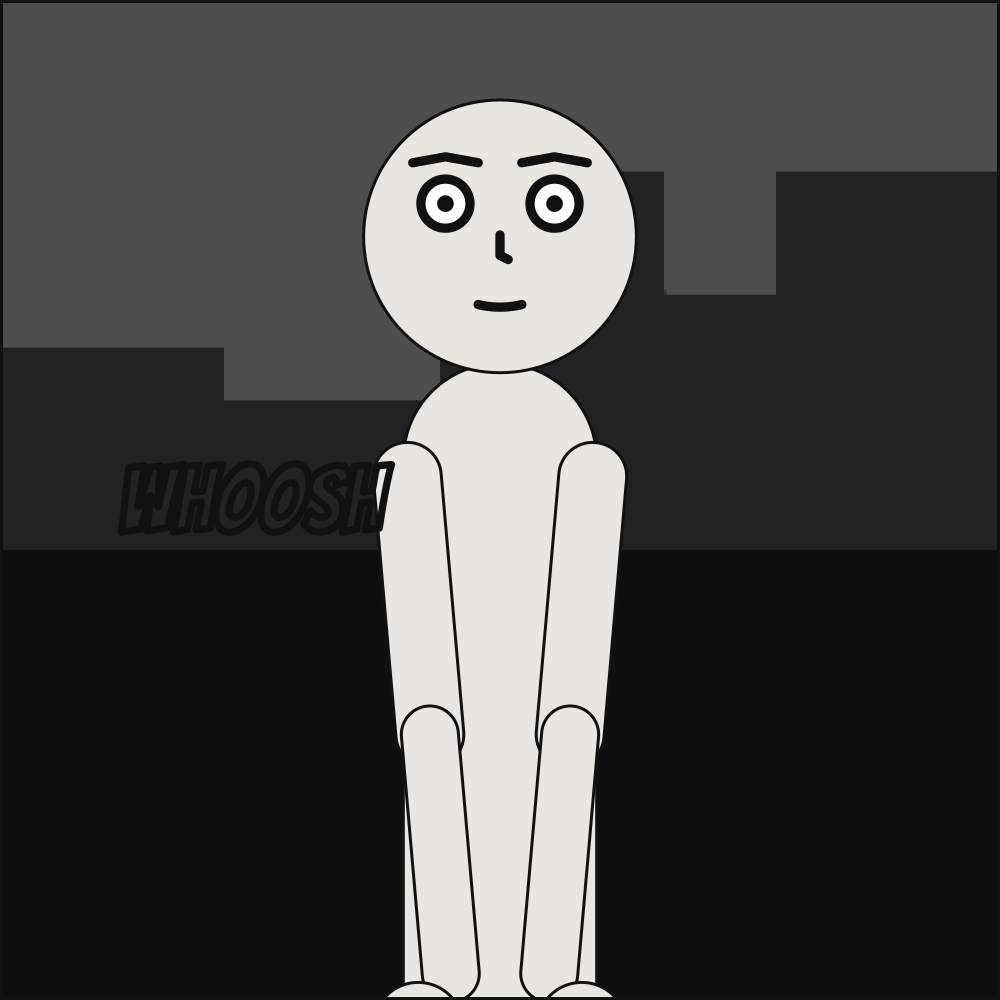
See also: sfx.