camera#
How the cast is framed: the shot, and the camera’s height.
Where |
A |
Type |
a mapping |
Default |
each key’s own |
Since |
0.1 |
Diagnostics |
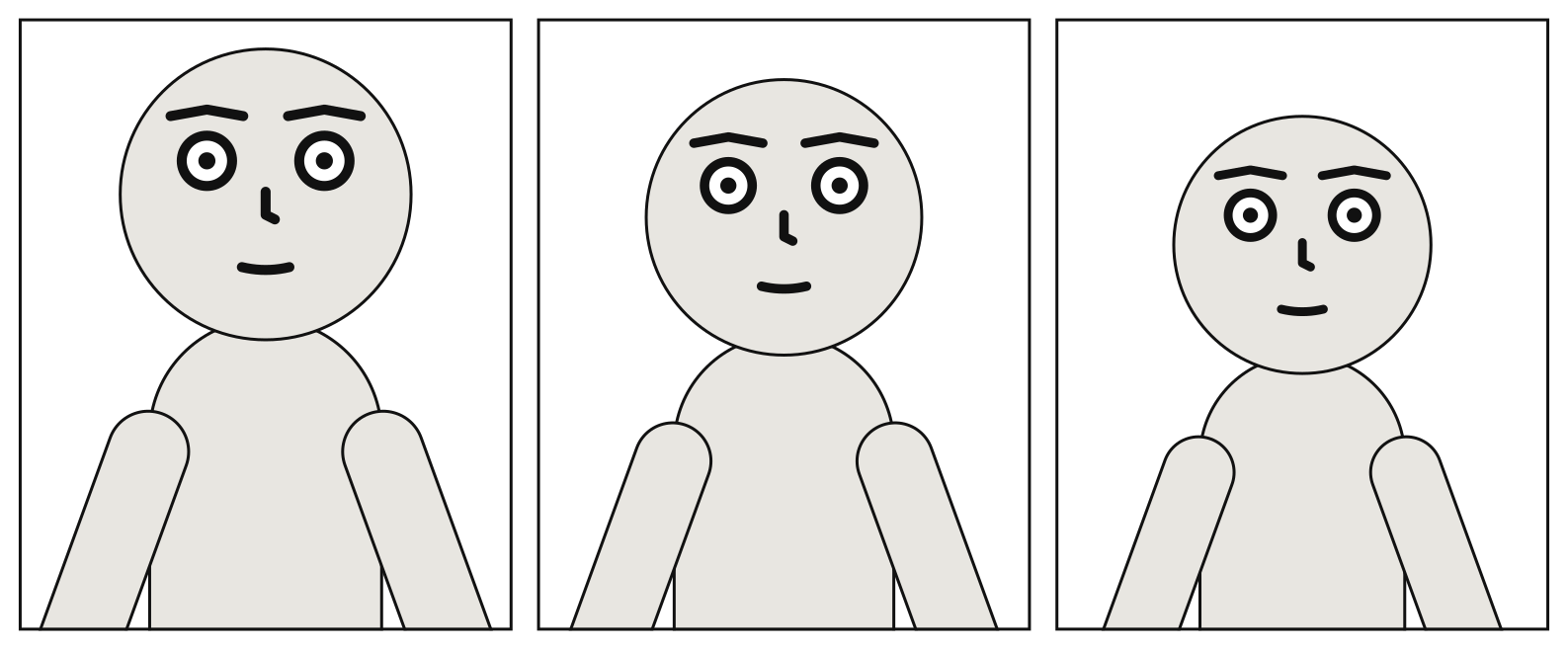
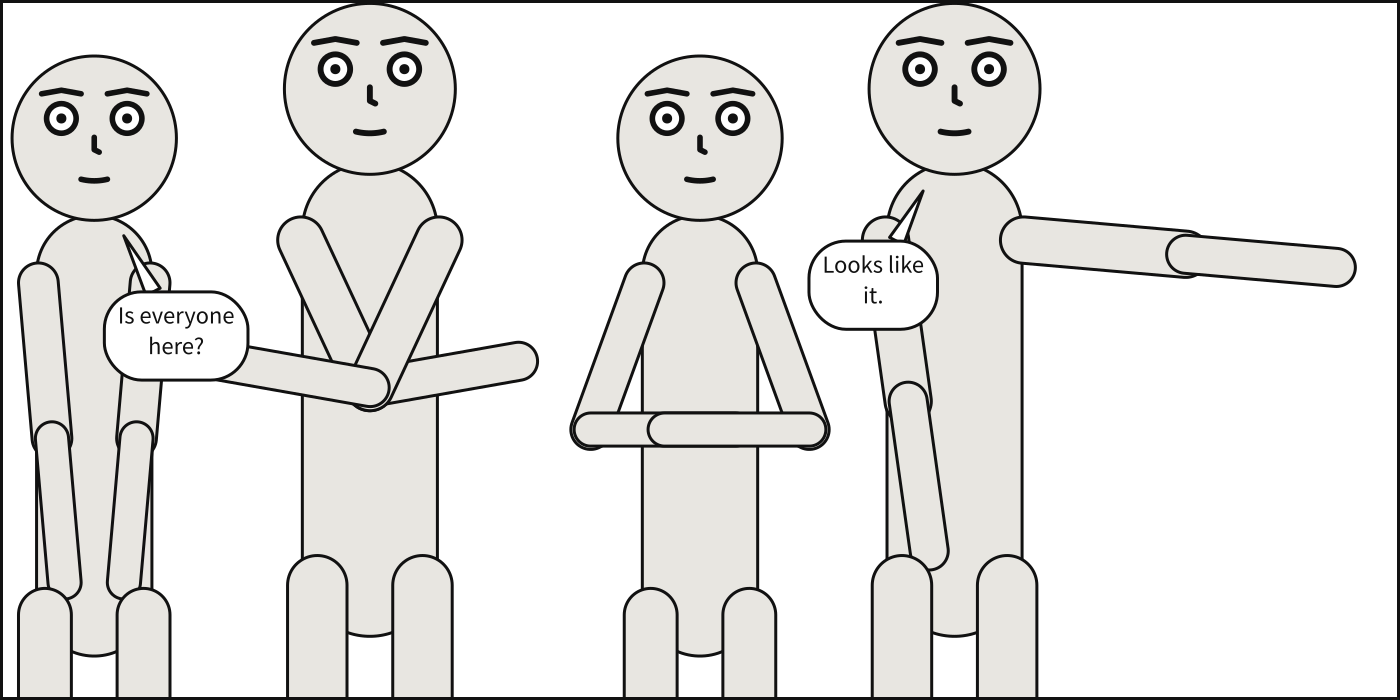
There is exactly one camera per panel, and every actor is drawn at the scale it implies. That is what keeps body differences readable: a short character stays shorter than a tall one, because both are framed by one shot.
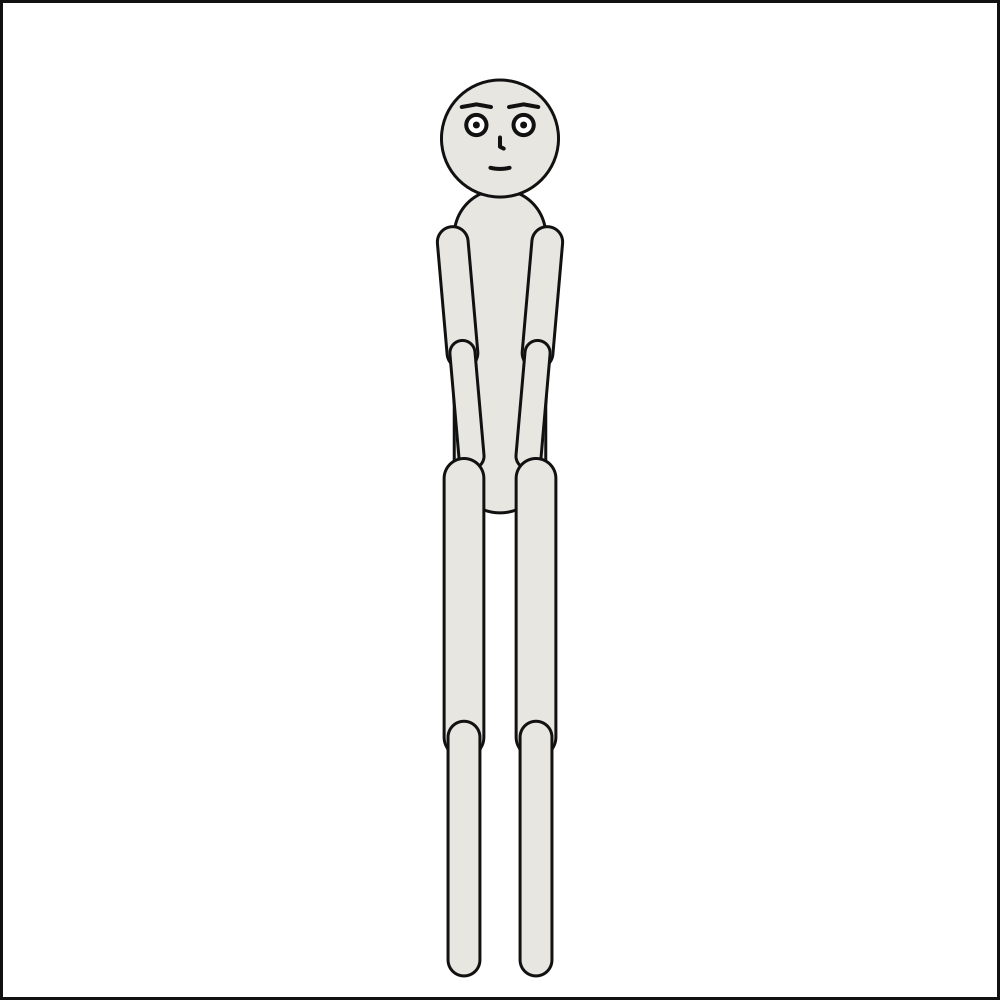
A cast of figures a picture draws has no camera: the picture is already framed,
and a camera: beside them is refused as figure-staging. A panel that inherits one writes
camera: null.
See also: Shot types, which is normative; cast.<id>.at.
camera.shot#
How tightly the camera frames the cast, named by where the frame cuts the body, from long_shot to extreme_close_up. The tightest it may go: the camera steps back when the cast does not fit.
Where |
A |
Type |
a name |
Values |
|
Default |
|
Since |
0.1 |
Diagnostics |
|
In the gallery |
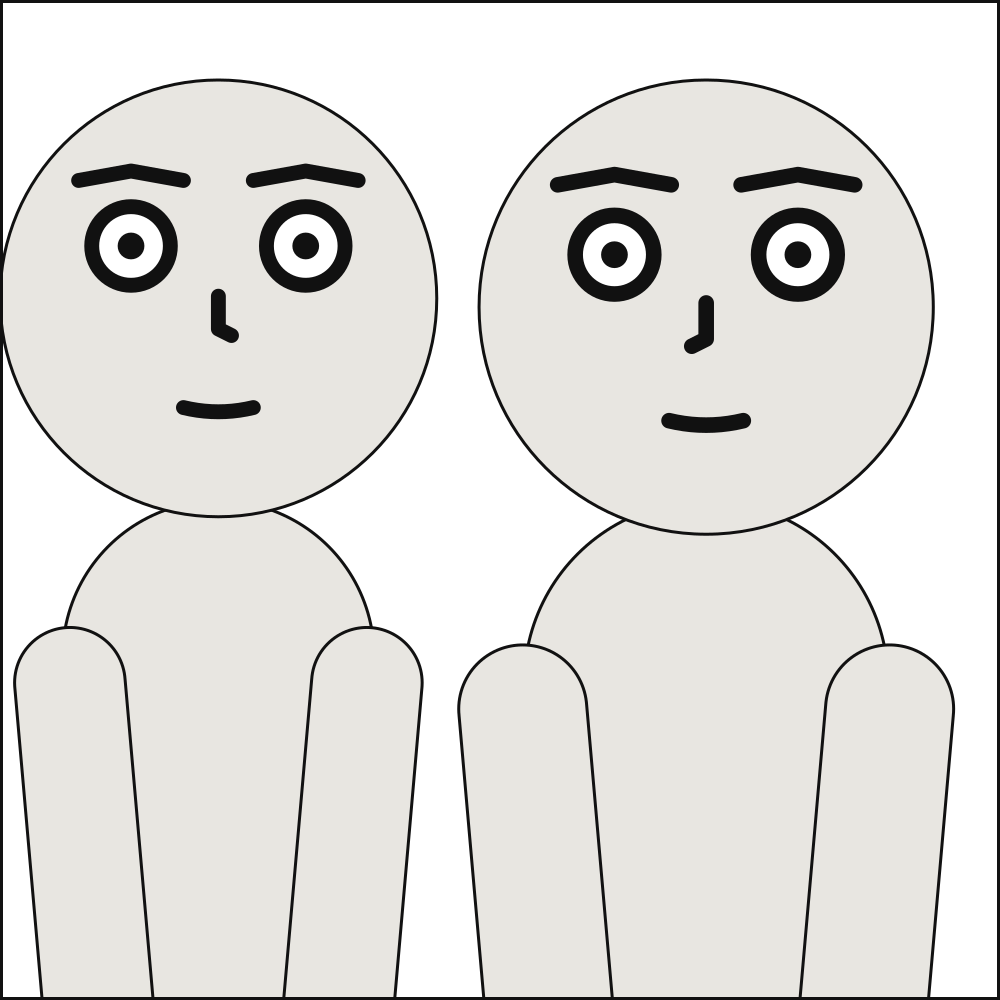
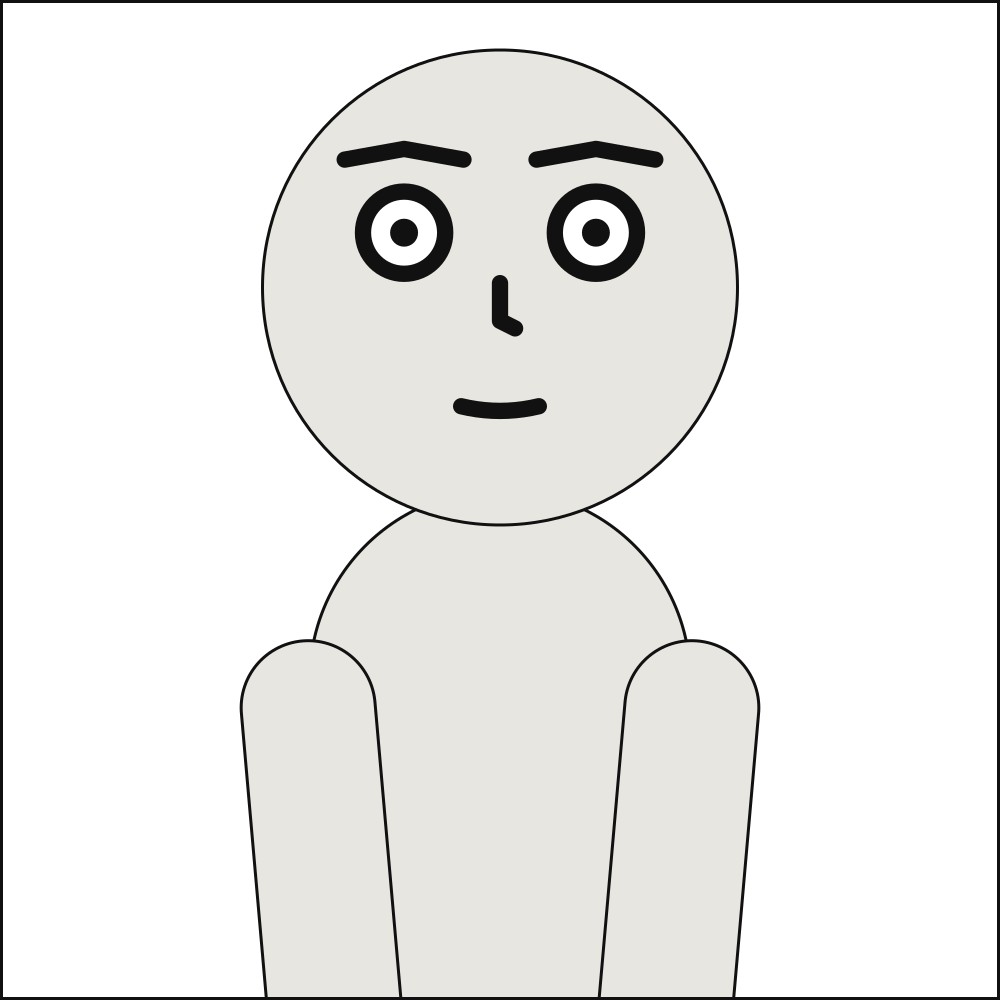
shot decides the scale of every actor, by naming where the frame cuts the body rather than
what fraction of the panel a figure fills: medium_shot cuts at the waist, close_up at the
shoulders. It is the single most consequential value in a panel. What each shot frames, in head
heights, is in Shot types; wide is another name for long_shot.
The camera retreats. The shot is the tightest the camera may go, not a promise. When the
cast does not fit across the panel at that framing, the camera moves back just far enough for
it to: everyone is drawn smaller, by one factor, and more of each body comes into view.
scenet build says so in a camera-retreated note, and Panel Core records the factor as the
camera’s pullback. Non-overlap is required and the shot is not, so the shot is what gives way.
camera: {shot: close_up}
cast:
  alice: {reference: alice, at: left_third}
  bob: {reference: bob, at: right_third, facing: left}
See also: camera.angle, When constraints conflict.
camera.angle#
The camera’s height: low looks up, leaving little air above the head; high looks down, leaving more.
Where |
A |
Type |
a name |
Values |
|
Default |
|
Since |
0.1 |
Diagnostics |
|
In the gallery |
The angle changes headroom, not perspective. Scenet is a flat, orthographic compiler, so a
tilted camera foreshortens nothing; what it changes is how much air sits above the head, which
is the cue a reader takes from an angle and one that survives being drawn flat. A low camera
looks up, and the head rides high with little above it; a high camera looks down, and more
space opens above. The factors are in Shot types.
See also: camera.shot.