Scene documents#
A .scene.yaml holds several panels. Each is written under panels:, by a name, with the keys a
.panel.yaml takes; and anything written beside panels: is a default every panel inherits. A
panel may also be written over another, and state only what differs from it. A scene may then lay
its panels out on pages.
What a panel is, then, is three layers, each over the one before: the scene’s defaults, the panel it
is over (and that panel’s own parent, as far as the chain goes), and the panel’s own keys. A chain
that names a panel that does not exist, or comes back to where it started, is composition.
How a panel inherits#
Two rules, and they are worth knowing precisely, with a third that takes something away:
Mappings merge recursively. Overriding one actor’s pose leaves the rest of that actor, and every other actor, alone:
cast: {alice: {pose: arms_crossed}}keeps Alice’sreferenceandat.Lists replace wholesale. Give a panel its own
staging:and you replace the parent’s entirely – there is no appending. A list has no keys to merge on, and guessing at identity by position would be worse than a clear rule. Somarks: []clears the marks a member inherited.nullleaves something out; see below.
Two keys do not follow the rules. A description says what one
picture shows, so it is never a default and never inherited: beside panels: it is unknown-key,
and a panel drawn over another writes its own or has one generated. And
direction is only ever the document’s: on a panel it is
panel-direction, since a sequence is read one way throughout.
null leaves something out#
A null removes what a panel would have inherited, as JSON Merge Patch
(RFC 7386) has it – “If the value is null, remove”. It
reaches whatever lies beneath, the panel it is over and the scene’s defaults alike, at any depth
reached through mappings: camera: null, cast: {bob: null}, setting: {place: null}.
A cast member who goes takes every staging relation that names them along, since none can hold in a
panel they are not in, and scenet check notes each one as dropped-relation. All but one, while
the member left out is heard from off panel: bob looking_at carol still holds when Carol speaks
off_panel in that panel. A null inside a list is left as it is: a list is replaced whole, never
merged into.
cast:
  alice: {reference: alice, at: left_third}
  bob: {reference: bob, at: right_third}
staging: [alice left_of bob]
panels:
  both: {}
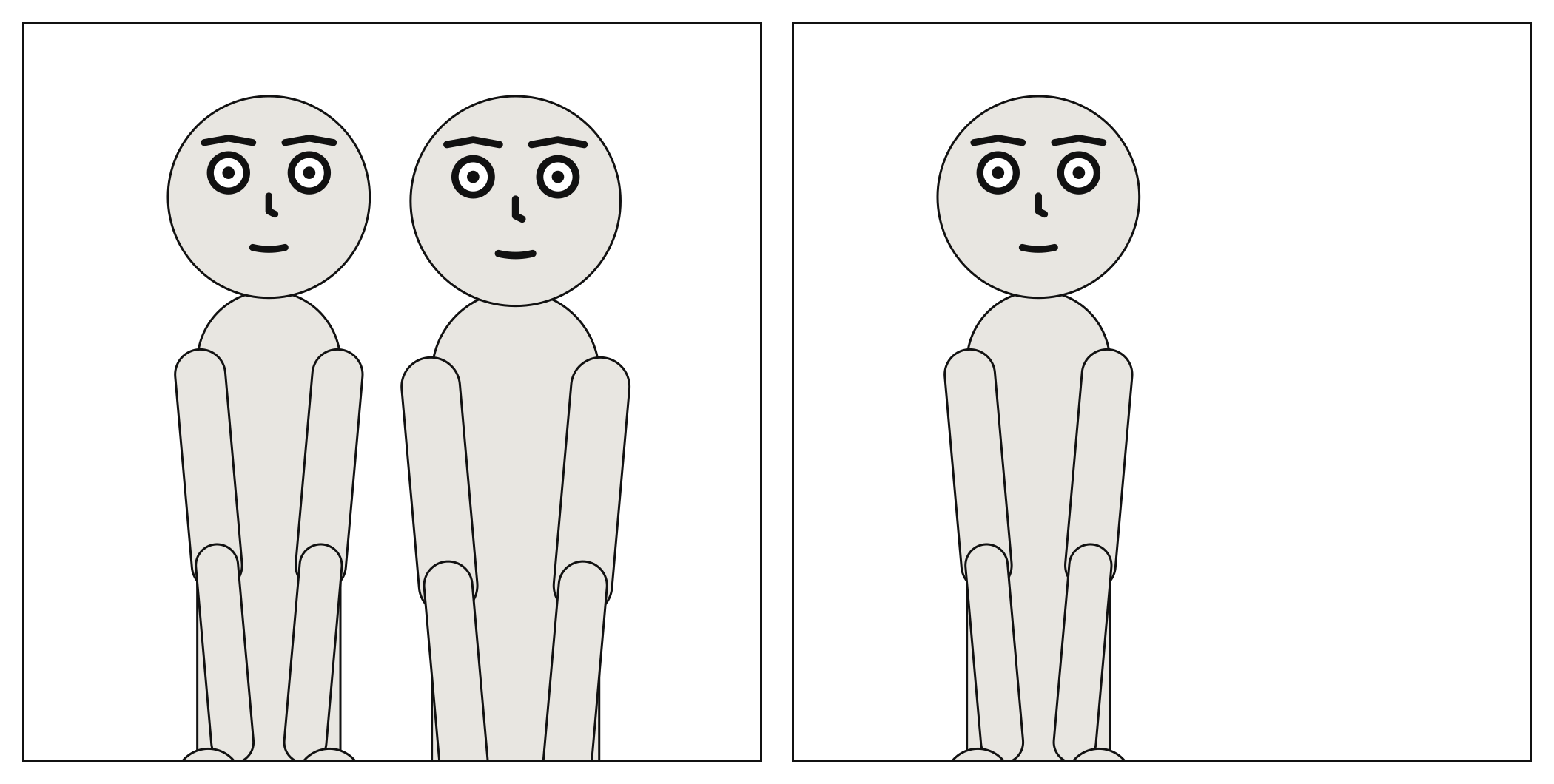
  alone:
    cast: {bob: null}
panels#
Panels in reading order. Each may inherit from another with over.
Where |
A |
Type |
a mapping |
Default |
none |
Since |
0.1 |
Diagnostics |
The panels, in reading order: the order they are written in is the order a strip draws them and a
screen reader reads them, unless pages lay them out. A name is text, as an actor id is, and is
written once: two panels of one name are duplicate-key. Everything a .panel.yaml takes may be
written under each, and over besides.
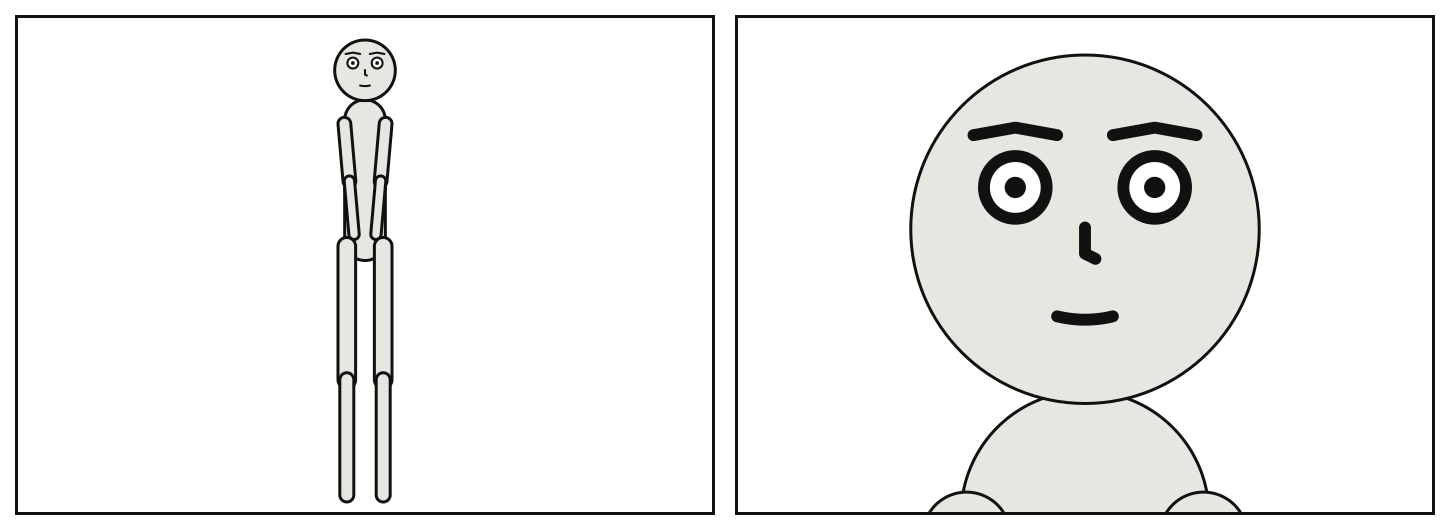
panel: {size: [700, 500]}
cast: {alice: {reference: alice}}
panels:
  first: {camera: {shot: full_shot}}
  second: {camera: {shot: close_up}}
See also: pages, Compile a sequence.
over#
Name of a panel to inherit from. Only the differences need stating: mappings merge recursively and lists replace.
Where |
A panel under |
Type |
text |
Default |
none |
Since |
0.1 |
Diagnostics |
|
In the gallery |
The keyword is borrowed from OpenUSD’s composition arcs, where
over means exactly this: name a parent, then state the difference. A comic script writes it as an
@over: directive. The parent need not be earlier in the document, nor on a page: a panel may
exist only to be inherited from.
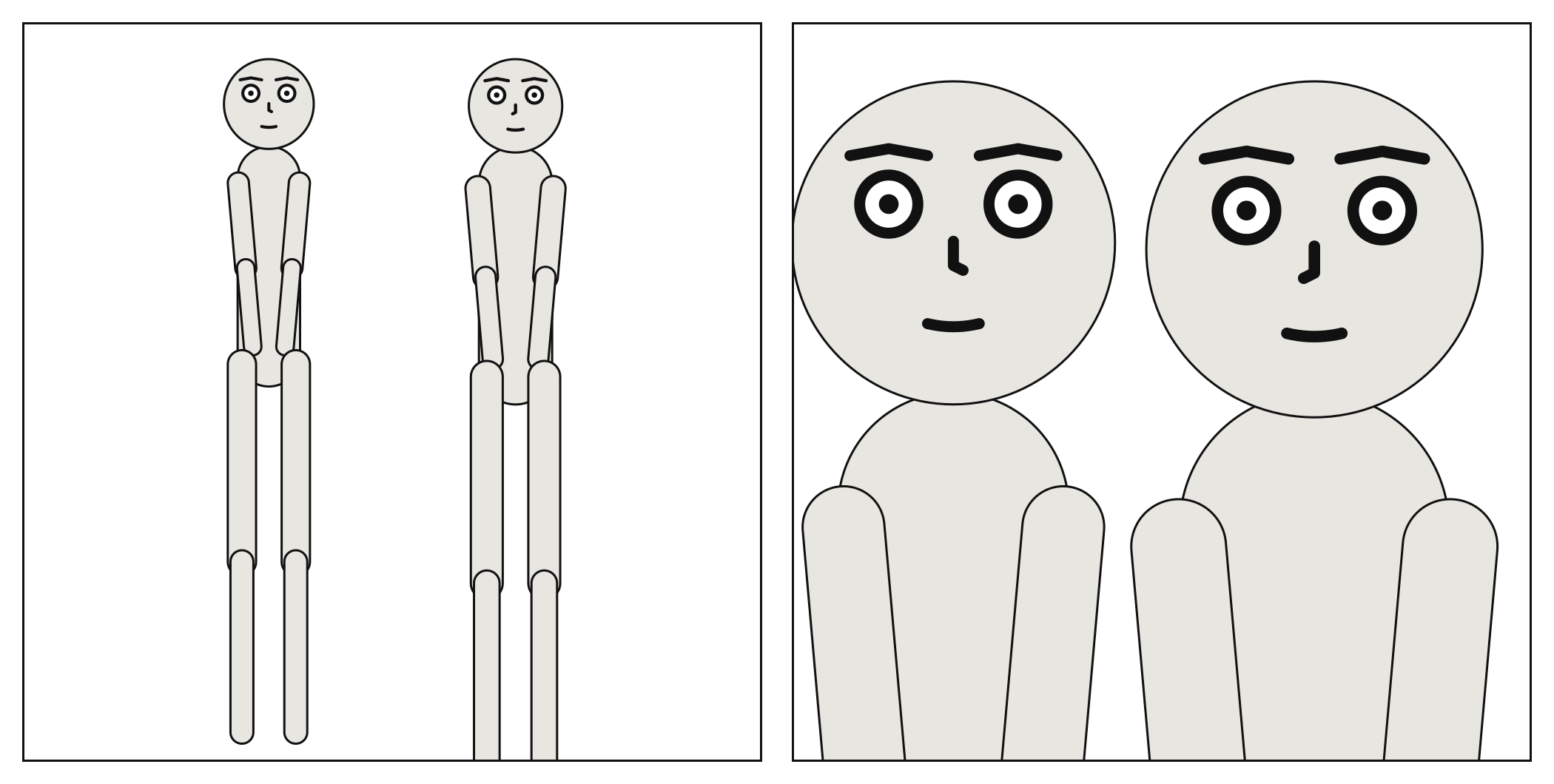
panels:
  establishing:
    camera: {shot: full_shot}
    cast:
      alice: {reference: alice, at: left_third}
      bob: {reference: bob, at: right_third, facing: left}
    staging: [alice left_of bob]
  reaction:
    over: establishing
    camera: {shot: close_up}
See also: How a panel inherits, One panel over another.